Showing posts with label Italian Genealogy. Show all posts

Monday, November 20, 2023

A Quest Completed!

Don’t we all love a good mystery? I think that’s why I love family history so much! It’s a quest for me, where the journey is as much fun as reaching the goal.
My bisnonno in his Italian Army 
uniform, c. 1897

What was my recent quest? It was finally finding the military records for my great-grandfather (bisnonno) Emanuele Antonio Mazziotti!! If you’ve read my other blogs, you know he is a constant feature, since his early life is a big mystery to me. He was orphaned by his family by being “left on a wheel” in Villa San Giovanni as a day old infant and family lore has him shipped off to Switzerland and raised by nuns until he became a foster child of the Bellantoni family in Scilla, Italy. My daughter found his birth record in 1876 after searching tirelessly page by page through Antenati (the incredible site for the best town birth, death, and marriage records) Villa San Giovanni records. Supposedly Grace Bova (Bellantoni) favored him over her own sons so he left to fight in Africa with the French Foreign Legion. Well, that was the story. What have I learned? I know that he came to America in 1900 according to his ship manifest, but what happened to him between 1876 and 1900 remained a mystery. So off on a quest I went!

Scilla, Italy
October 2023

My Quest
A few weeks ago, I went to Scilla, Italy to search for his past!! It was a surreal experience because I lived for a week with a genetic cousin (we don’t actually know how we are related, but we share 26 cM of DNA!), Carolina, who hosted me and another cousin, Cas, for the week at her home. Googletranslate worked wonderfully for us and Carolina was incredibly valuable to me as I plotted my adventure to search out my family’s history. The trip was absolutely amazing and I have so much to process and share, but here I will just talk about my quest to secure my bisnonno’s military records. (A colleague of mine directed me to military uniforms several years ago, where I learned that his uniform was NOT French foreign legion and it WAS Italian Army.)

Prior to Going
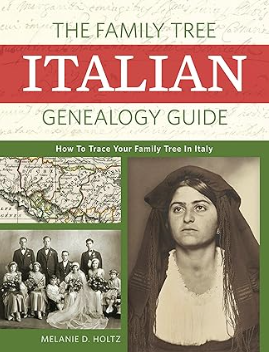
In preparation for this trip, I chose to take a course offered through the Family Tree University called "Find Your Italian Ancestors". It was a good course and I would recommend it, although I do have some serious critiques (such as some of the lessons have not been updated and some references to websites and resources are seriously outdated). The instructor for the course is Melanie D. Holtz, who encourages you to purchase her book The Family Tree Italian Genealogy Guide. I do highly recommend this book if you have Italian family research, I appreciate that it includes both instructions on how to locate records in Italy and also sample template correspondence. I used these sample templates when I wrote to the Archivo di Stato in Reggio Calabria to understand their policies on making appointments and requesting information.


Archivo di Stato di Reggio Calabria

Cas and I took the 20-minute train to Reggio Calabria from Scilla and back for less than 6 Euros! The archives was about a 25 minute walk from the train station and surprisingly was tucked up on a hill in a fairly residential area. I was one of 5 researchers in the Reading Room and the only one who didn’t speak fluent Italian. Although the head archivist was not excited to help me and treated me much like I had read about—(in other words, she found my request burdensome)–the younger female workers tried very hard to help me.

I FOUND IT!!

And it is filled with wonderful information that I'm still processing. It is officially called his Fasciolo Matricolare, which are his personal military records. It includes a description of his physical features, like his hair and eye color were described as chestnut and his skin color was tanned and he was 1.645 meters tall (64.8 inches). It was not suprising that his father was listed as "Ignoti" (unknown) but his mother was listed as Grazio Bova ("nutrice"--which is nurse)!!


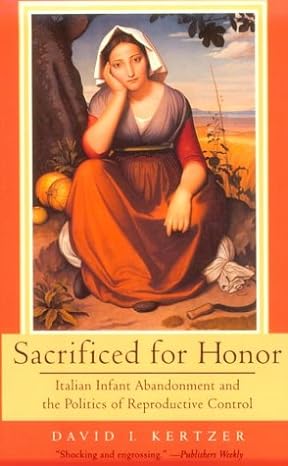
I’ve been reading a book, Sacrificed for Honor: Italian Infant Abandonment and the Politics of Reproductive Control (1993) by Brown University professor David I. Kertzer. In 1863, the highest rate of abandonment was in southern Italy, specifically in Sicily and Calabria (where my bisnonno was raised). The rates of abandonment were over 5% of newborns and the mortality rate was over 50%! Women from the communities were paid to be wetnurses for the babies and those babies who weren't matched were less likely to survive. I'm really glad that my bisnonno was among the lucky ones to be matched with a wetnurse and to survive!  Sacrificed for Honor: Italian Infant Abandonment and the Politics of Reproductive Control

This suggests that Grazia (Grace) was his wetnurse and chances are that he was raised in the home along side their other children and he was with them until he served his required military service in the Italian Army. The document provides the accounting of where and when he served and what he did. So, Where did he serve? Africa!!

So, like most family lore…some is true…and some is not! And it was a LOT of fun figuring out which is what!

Friday, May 19, 2023

The Stories Within the Documents

Family history is so much more than names and dates. While it is fun for me to track down the documents to verify births, deaths, and parentage, and find that next generation, it is truly the stories that matter. The mother in this photo is Antonia Mortellitti and I share a little of her immigration story here.


Farfalla family c. 1931 Antonia Mortelliti and Antonio Farfalla with 5 of their children (l to r): Joseph (b. 1904), Mary/Maria (b. 1910), Margaret/Domenica (b. 1906), Sarah/Santa (b. 1908), and Anthony (b. 1912). 

Sometimes when I’ve come across a new document (e.g., census, birth record, etc,)  I focus only on the names, dates, and vital information. Occasionally, I will take note of the witnesses as Lisa Louise Cook and others remind me how they might provide a helpful clue. (See this November 2022 webinar for more info about using witnesses). Rarely, do I take the time to mine all of the possible information. But I am learning this is where we can truly find the interesting stories and a glimpse into the lives of our ancestors!


Last week, I attended the Allen County Public Library’s weekly webinar titled “Mysterious Codes:  

What Do Those Letters and Numbers Mean?” presented by Christine Cohen. It was a fascinating hour-long presentation about the codes and notations made on the ship manifests of people traveling into the US. (I have the handout if anyone is interested.)


I have found many of the ship manifests for my ancestors and I would see “X”’s in places or check marks or random numbers and never knew there was a specific and known purpose. About a year ago, I learned about how to find the codes used on Census’--you wouldn’t be surprised to learn that they have instruction manuals for Census takers so that there was consistency. For example, here is the cover to the instruction manual for the 1860 Census. Each mark is intentional, and the instructions for what to include is purposeful. But this is a topic for another blog! What I didn’t realize is that the same was true for Immigration Manifests!


This past week, I was focusing on my Italian family, so I looked through the ship manifests for my Italian immigrant ancestors. Most of them came prior to 1906, which is when a lot of changes took place in immigration policies in the US and there was more consistency, but you can start to see the markings appear prior. 


There were no special markings on the entry for my great-grandfather, Emanuel Antonio Mazziotti or his wife, Concetta Mortelliti, but I did find some on Concetta’s sister’s manifest and it has opened a new world to me. 


Concetta (1890-1971) was the youngest of 6 children born in Scilla, Italy to Giuseppe Mortelliti (1843-1915) and Santa Morabito (1857-1945). Giuseppe traveled from Scilla to the US a couple of times, but it appears in May 1900 that this was the one that finally stuck. This was the trip, also, where his future son-in-law and my great-grandfather Emanuel Mazziotti joined him. They traveled on the ship, Tartar Prince.

Source: https://deeproots.family/up/TartarPrinceVessel.htm


A year later, in June 1901, the 5 oldest children of Giuseppe Mortelliti traveled together on the Manila, with Antonia (1877-1967) the oldest of the five at age 23 caring for them all. (I couldn’t find a photo of the Manila.) They would first arrive to the immigrant landing station. It looked like this in 1905.

(ca. 1905) Immigrant Landing Station, N.Y. New Jersey New York Ellis Island, ca. 1905. Feb. 24. [Photograph] Retrieved from the Library of Congress, https://www.loc.gov/item/97502077

After exiting the ship, they would have had to be documented. This is what it looked like between 1902-1913.

Source: The Miriam and Ira D. Wallach Division of Art, Prints and Photographs: Photography Collection, The New York Public Library. (1902 - 1913). The pens at Ellis Island, Registry Room (or Great Hall). These people have passed the first mental inspection. Retrieved from https://digitalcollections.nypl.org/items/510d47da-d778-a3d9-e040-e00a18064a99


This time looking at the manifest, I noticed an X in the first column before her and her sibling’s names. 

  • This means that they were detained at Ellis Island!! 

  • And there is a “Record of detained Alien Passengers” at the back of the ship manifest! (I have been looking at these for nearly 15 years and NEVER knew about the list of detained passengers!!)

This record provides information about why someone was detained, the disposition (information about where they will live), and which and how many meals they ate while being detained.


Antonia and her 4 siblings (2 brothers and 2 sisters) were detained for only one meal, a “supper”. According to the Ellis Island Immigrant Cookbook by Tom Bernadin and a 1906 communication it would have consisted of baked beans, stewed prunes and rye bread, tea with milk and sugar, and crackers and milk  for women and children. 


https://digitalcollections.nypl.org/items/510d47da-d817-a3d9-e040-e00a18064a99

The Miriam and Ira D. Wallach Division of Art, Prints and Photographs: Photography Collection, The New York Public Library. (1902 - 1913). Uncle Sam, host. Immigrants being served a free meal at Ellis Island. Retrieved from https://digitalcollections.nypl.org/items/510d47da-d817-a3d9-e040-e00a18064a99


Their father (and my great-grandfather) were living at 168 Elizabeth Street in 1901. This was in the heart of “little Italy” where there were thousands of Italian immigrants, mostly southern Italians. This was an apartment building that was built in 1900 and had 6 floors with 2 apartments per floor with a business at street level. Here’s how it looks now:


It was about 6 miles away to Ellis Island and I have no idea how Antonia would have connected with her father or how she and her siblings would have gotten to this building. I guess that’s research for another day. 


A year later, the entire family is now together, after Concetta and her mother made the journey from Scilla in July 1902 to Ellis Island on the Trave. They were not detained but the document also didn’t list what address they were going to. I guess a 46 year old mother and her 11 year old daughter heading to her husband did not raise questions.


Source: https://passengershipsandliners.fandom.com/wiki/SS_Trave


Within a year, Emanuel Mazziotti and his 1st wife, Maria Mortelliti (the older sister of my great-grandmother) would be wed in Pocantico Hills where several males of the family would be working at Rockefeller’s Estate,  Kykuit. She died along with their first born son. A few years later, Emanuel and Concetta are married. Another story for another time.


I marvel at the journey my Italian ancestors made in the 1900s traveling so very far from the only home they (and their ancestors) had known for hundreds of years. Their story inspires me and helps to put into perspective challenges in my own life.


Saturday, February 11, 2023

Molly and Me--Ready for an Adventure

And we're off! 

Molly is my car. She's a Malibu and she is all set and ready to go. She's all packed up, ready for our morning adventure. 

Our first stop is the Allen County Public Library in Ft. Wayne, Indiana. Some people find it odd that some county library in the midwest would have incredible holdings of genealogy. There was a generous benefactor who was a genealogist and cared deeply about it. His legacy is this amazing free resource. I have an appointment with a genealogy librarian at 10am on Monday, who I have prepared with a research question and as much information I have on this person and what I hope to find. I will spend 2 days (10am-8pm) in the library and I'm excited!!

The Practice Run

My practice run to the Westchester County Archives last Wednesday went well and I learned some things.


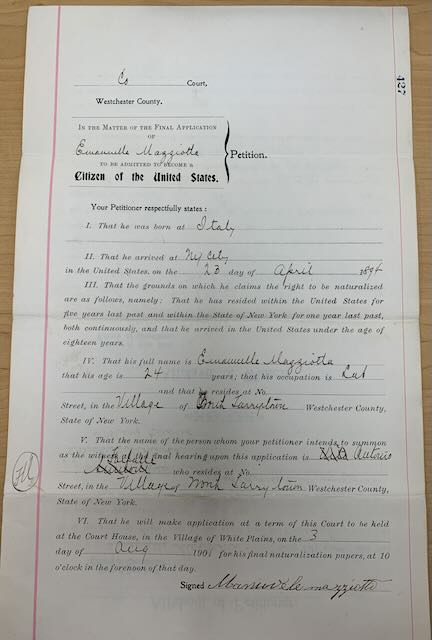
And also *think* that I found the Naturalization Records to my great-grandfather, Emanuel Anthony Mazziotti. The reason that I say *think* is that there is some conflicting information that raises more questions!! (I'm learning that this may be a theme).

If this is him, he was naturalized on August 3, 1901. It didn't provide a street address for where he was living, just "North Tarrytown", which is likely to be Pocantico Hills, where Kykuit (Rockefeller's Estate) is where I believe he was working at the time. It was amazing to be holding the actual original paperwork that my great-grandfather held in his hands and signed his name! It's hard to tell from the photos but the naturalization paperwork is folded in half and then folded into fourths. I almost missed that it had been folded in half and that there was an inside to it!! The length of the paper when folded in half was approximately 8.5" x 14".


The Outside of the Naturalization Petition
 I learned also that this is a "Minor Alien" petition. These were issued for anyone under the age of 21 when they first arrived to the country. (Naturalization Act of 1906 changed rules and also the forms. They became more specific and included the ship name and other family members.) 

One of the reasons that I am doubting if this is my Emanuel Mazziotti (beside the name of Mazziotta) is that he had to have been in the country continuously five years from the time of first arrival before this petition.

The "Back" side of the Naturalization Paperwork
We have "evidence" that suggests that he was in the Italian Calvary from 1894-1897. And I know that he arrived in 1900 on the Tartar Prince.

So there are 3 possibilities:
The "Inside" Top
  1. This is not my Emanuel Mazziotti
  2. Our evidence is wrong and the time frame must have been different about when he was in the Italian Calvary
  3. He mis-identified when he arrived.
While it is possible that this is not my Emanuel, his witness was an Antonio/Antonino Farfalla. In 1910, there was an Antonio Farfalla living with my great-grandfather and he was his brother-in-law.

In talking with the archivist and sharing my conundrum, she said that it was not unheard of at the time that if they had a "sponsor" that that person would help along the naturalization process. In those cases, sometimes people would lie about the date they arrived to move along the process.

Both my daughter and I searched and search the ship's manifests for the date he said he arrived and we didn't find a Mazziotti (or any permutation of the name) who arrived that day or in the following week. 

At this point, my hypothesis is that this is my great-grandfather and lied (gasp) about the date he arrived. But, I have more to investigate and will withhold complete judgment until I do.

Meanwhile, I'm happy with what I learned about archival research at the archives (mechanical pencils are NOT okay!) and also with a second page to his marriage record. (Note the spelling of his name and I *know* this is my great-grandparents' marriage record.)


The "Inside" Bottom


What's Next?

My first brick wall! I'm going to do a thorough search at the ACPL on Henry Edward Leach. Looking forward to seeing what I learn and what paths it may take me on!


Tuesday, February 7, 2023

Names and Naturalization


Top: Mary Anne, Florence Mary
Bottom: Mary, Mary Grace

Names and calling people by their preferred name is important to me. Maybe it is because my given name and what I prefer to be called are different. I was born Mary Lynn Massey. I like(d) my name and am happy with “Mary”. I come from a long line of “Mary’s”, there’s my mom, Mary Anne, my great-grandmother Florence Mary, my great-great-grandmother Mary, and my godmother, Mary Grace Mazziotti Sippel.  And as proud as I am of Mary, that’s not what I liked to be called. I prefer to be called “Lynn”, I suspect it’s because it’s what my parents always called me, except, of course, when my mother was unhappy with me and then she called “Mary Lynn!” But it was always important to me that people call me “Lynn”, so every year on the first day of school we went through the routine as the teacher was calling names on the attendance list.


   Teacher: “Mary Massey?” (chuckles from knowing classmates)

   Me: “Here, but actually I prefer to be called ‘Lynn”.” 

   Teacher:  “Lynn?” 

    Me: “Yes, that’s my middle name.” 

   Teacher: “Oh, Okay.” (Thank you.)

  It’s actually quite a great screening mechanism and useful when telemarketers call. “Is Mary there?” “Nope, no one goes by that name here! Goodbye.” click.

Calling people by the name they asked to be called, I think, is a sign of respect, caring, and honor. As a teacher/professor, I want to get the students’ names correct and always ask them to share their preferred name and correct me on the pronunciation. I also really appreciate doctors' offices and other places where my legal name appears but they care enough to call me, Lynn.


But while I respect calling people by their preferred name, it sometimes makes researching the family records difficult!! I know that when I’ve performed a search on myself, there are over half a dozen different names recorded–Mary Massey, Lynn Massey, Mary Lynn Massey, Mary Breyfogle, Mary Lynn Breyfogle, Lynn Breyfogle, and even M. Lynn Breyfogle! I will just apologize now to my descendants who might be interested in researching me! Sorry!


Naming Traditions and Conventions


Names continue to fascinate me. Naming traditions and conventions and how that has changed over the generations and differs by cultures is interesting, especially in genealogy work. When you learn some of the naming conventions it CAN be helpful for family history work. 


For example, in Italy (and many early Italian immigrants), there is a methodical way of naming children. The first male and female children are named after the paternal father and mother, respectively. The second male and female children are named after the maternal father and mother. After that, it is the parents (although if the father was a first-born, that name was already taken) or  it could be aunts/uncles/cousins/friends. Since mortality rates of children were high, if the first child named after a particular grandparent died, the next child born would have that same name (this is called necronymics). So, you could imagine that the order of the named adult children will not be “perfect” and you have to watch assumptions that you make…but the naming order is a general rule you can use in Italian families. This explains why there are so very many Rocco Bellantoni’s! (For more read June 2005 Family Tree Magazine).


For German family trees, I recently learned, the reason that I find so many Johannes (John) is that German boys were almost always baptized with the first name of Johannes! They rarely used their first name and always had a second name, so they were called by their second name. The same held true for girls, except they were usually baptized with Maria (Mary) and then called by their second name. I guess my name fits well in a German family tree! (For more read the September 2012 article in Family Tree Magazine).


I love to hear the stories around peoples' names. Who were they named for, or even If they were named after someone. I often ask students about their names and love hearing their stories. This past fall, I met a student whose family immigrated from Ghana. Her surname was Appiah-Padi and I know someone with that same last name from Ghana, so I asked her about her name, wondering if there might be a connection. She was happy to share with me that in her culture last names are also given to the baby in honor of other people chosen by the parents. She doesn’t share a surname with either of her parents or grandparents! Neat tradition, but wow…that might make the genealogical research much harder. I will stop complaining about how many Giuseppe Mortelliti’s there are in my tree!


Naturalizations


Well, speaking of Giuseppe Mortelliti, that brings me back to my finding this week! This Giuseppe is my great-great grandfather and he immigrated to the US from Scilla, Italy and is the father-in-law of Emanuel Anthony Mazziotti (aka. “Mystery orphan baby”). One of my research goals for the year is to find the naturalization records for Emanuel Anthony Mazziotti (and Giuseppe). I have been searching on and off for YEARS to find Emanuel’s naturalization records. 


His name is part of the problem. I learned two summers ago that his name was just made up by the Recording Clerk in the commune where he was found as a baby. He has no known siblings, no one else that shares his last name or first name, until you get to his children and grandchildren. My dad called him “Pop” but said that he was called Tony or Anthony by family or friends. Emanuel is spelled many different ways in different documents and sometimes paired with Antonio or Anthony. Sometimes he appears to be recorded as just Antonio/Anthony and his last name is Mazziotta or Mazziotti and in the 1910 census, which took me decades to find, he is listed as Antone Martin!! (Yep, absolutely positive this is him!).


My husband has asked me this week why I care about the Naturalization Records? What did I hope to find that I didn’t already know? I stood dumbfounded and couldn’t find words. He said, “Well?” Oh, there are so many reasons..but you are reading this blog so YOU probably understand.


Naturalization records are complicated to find because there are so many factors. The U.S. Citizenship and Immigration Services website sums it up: 


Immigration and nationality records changed over time. For this reason there is no one set of instructions to guide family history research. What records exist and how to find them depend entirely on when the immigrant arrived and if, when, or how they became a United States citizen.” (bold added by me)


One thing that the Naturalization records help to find is the immigration date. I actually already know that for Emanuel. I found the ship manifest and records of his entrance (and a travel companion, his future father-in-law Giuseppe Mortelliti) into Ellis Island years ago, but his path to becoming a naturalized citizen has eluded me. Some facts I “know” about Emanuel:


  • He arrived May 28, 1900 to New York from Scilla (via Naples) and reported that he was going to live with his “father, Rocco” at 168 Elizabeth Street in New York City. (If you have any Italian relatives or are just interested in immigration stories, Laurie Fabiano’s 2006 book Elizabeth Street: A Novel Based on True Events is a must read!) 

  • Emanuel & Concetta Mazziotti
    February 9, 1908

    In 1903, he married Maria Mortelliti (Giuseppe’s daughter) at Church of the Magdalene in Pocantico Hills. (Note: Maria died after giving birth to Rocco Mazziotti, who also died as a baby. Emanuel ends up marrying Concetta Mortelliti, the younger sister in 1908 and they end up celebrating 55 years of marriage and 7 children who all lived fruitful long lives.)

    This was taken at their 50th Wedding Anniversary
    1958

  • The 1905 New York Census is missing pages and I have searched but can’t locate Emanuel there. I see a neighbor from the 1910 census on the last page before a break…I’m guessing he’s on the next (lost) page!

  • The 1910 US Census identifies Emanuel (and Giuseppe) as “Aliens” working on the Rockefeller Estate (Kykuit) in Pocantico Hills, a hamlet of Mt. Pleasant in Westchester County, NY. 

  • The 1915 NY Census identifies both as  “Citizens” with Emanuel (a mason) and growing family living on Saw Mill River Road and Giuseppe (called Antonio Martello) on Hartzdale Rd. both in Greenburgh (Elmsford) in Westchester County, NY.

  • The 1920 US Census identifies that Emanuel  is “Naturalized” and the date given was 1902! Giuseppe had passed away, but his widow Santa Morabito Mortelliti is listed as Naturalized also with the date of 1902.


If you were reading closely to the facts, you see a big conflict. If, according to the 1920 census he was naturalized in 1902 then why did the 1910 census say he was an alien? Well, anyone who knows about self-reported data and the Census takers, knows that while everyone tries to give accurate information we are all humans and errors are made (and sometimes white lies). Especially when the information is provided by a person with a thick accent who may not be understood by the census taker or who may not have understood the question! 


Ancestry.com and FamilySearch both have indices for finding naturalization records. I’ve looked and I can’t find any permutation of his name. This past week, I decided to focus on really searching. If I take my dad at his word (who told me the family lore is that he became a citizen in 1902) and the 1920 Census as accurate, then I should focus on pre-1906 Naturalization record finding techniques. Which is …for New York, go to the county records. Again, I made an assumption that he was in Westchester County, rather than looking to New York City.

Long story short… I have found the index through the Westchester County Archive page and among the listings (after painstakingly going through year by year), I have found the index Petitions for Naturalization for BOTH Giuseppe Mortelliti and Emanuel Mazziotti. I’m not quite sure why there are two files for each of them, but what were the names?

  • Emanuel Mazziotta

  • Manuele Mazziotti

  • Giuseppe Mortellite

They don’t have the records available for viewing on line, so Wednesday (tomorrow!), I have an appointment with the archives and will be driving the 3 hours there and back to view the actual documents!


Fingers crossed that the Emanuel and Giuseppe in the index are actually them….and they tell me some tidbit of information that I didn’t already know. But if it is them and I don’t learn anything new, that’s okay, the search was worth it and I can check off that box and move on to the next research goal for the year! Stay tuned…I might have something to say later this week. 🙂


America250-Revolutionary War Patriots --#6--Lt. Caleb Hopkins

Jim’s 5th great-grandfather, Lt. Caleb E. Hopkins (1749-1824) DAR (#A047932) served as a Lieutenant Revolutionary War Patriot.  He was the s...