Showing posts with label Mazziotti. Show all posts

Saturday, July 5, 2025

Grandparents of my Grandparents

 Anyone who has read any of my postings knows that family is incredibly important to me. I feel so lucky with the family members related to me and the role they have played in making me who I am today. Grandparents were those very special people to me. I was fortunate because I knew all four of my grandparents as a child and also as an adult. My first grandparent to pass away was my paternal grandmother, Dorothy Emma Sedlock Massey, in 1993, when I was 25 years old!
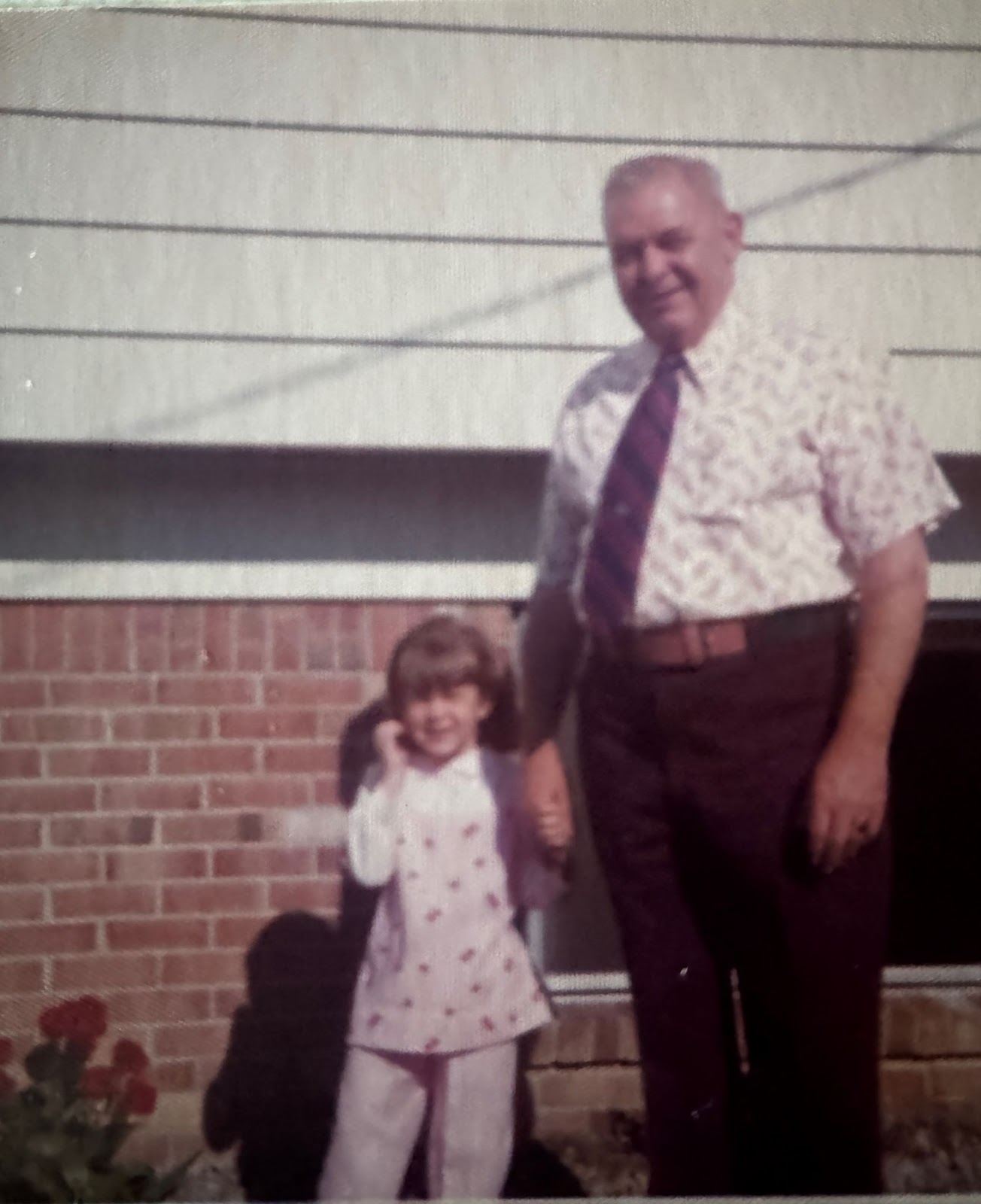
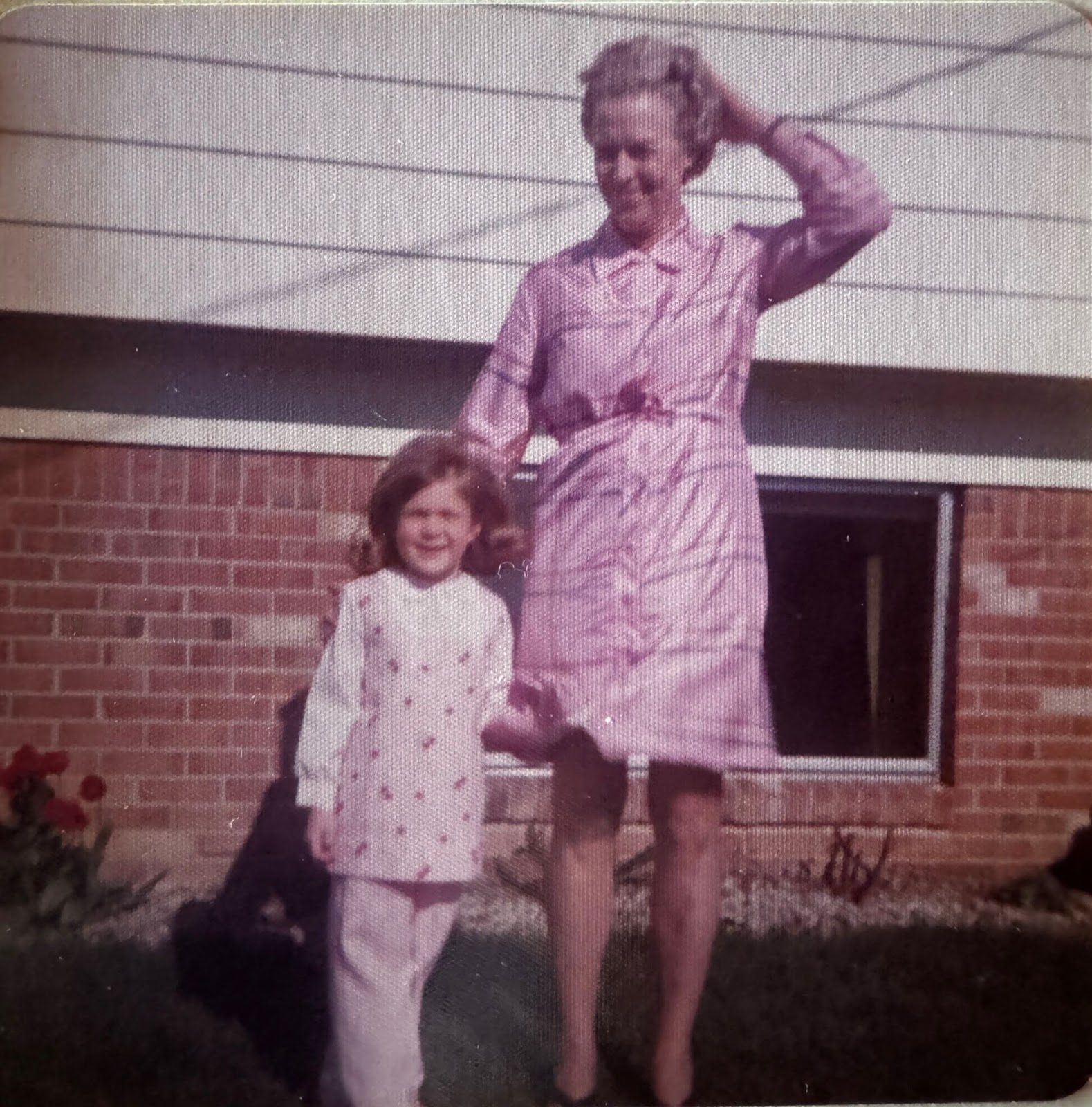
Today’s Saturday Night Genealogy Fun posted by Genea-Musings asked the question, “Did your grandparents know their grandparents?”


Paternal Grandfather, Rocco Joseph Mazziotti (1909-1995)
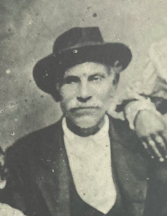

Rocco Bellantoni

As I have recorded in other blogs, my grandfather’s father was a “wheel baby” in Calabria, Italy and never knew his biological parents. He was adopted/fostered by Rocco Bellantoni (1842-1920) and Grazia Bova (1847-1900). While my grandfather, Rocco, might have known his namesake since they overlapped 11 years, to my knowledge Rocco Bellantoni never came to the United States and my grandfather never traveled to Italy.


My grandfather did, however, know his maternal grandparents:

  • Giuseppe Antonio Mortelliti 

    • b. 26 Feb 1843 in Scilla, Reggio di Calabria, Calabria, Italy

    • d. 29 Jul 1915 in Elmsford, Westchester, New York

  • Santa Morabito

    • b. 3 Aug 1857 in Scilla, Reggio di Calabria, Calabria, Italy

    • d. 3 June 1945 in Elmsford, Westchester, New York

These grandparents are the people who immigrated in 1893 (Giuseppe) and 1902 (Santa). Giuseppe travelled back and forth a few times before all of the family finished arriving in 1902 when Santa and her daughter (my great-grandmother Concetta) were the last to arrive. Unfortunately I have no photos of this couple to date, but I’m sure there were some taken and I just haven’t found them yet!


Paternal Grandmother, Dorothy Emma Sedlock (1910-1993)


Emma and Otto, 1 Oct 1911
My grandmother, Dot, had a difficult childhood. Her parents, Alonzo Sedlock and Louise A. Hillmann, both struggled with their mental health at various points in their lives. They separated and divorced around 1913, when my grandmother was just 3 years old. My grandmother didn't talk much about her childhood, but my grandfather shared with my father the following story. After the divorce, Dot and her sister were living with her mother who left them in a hotel room when she was working as a clothes buyer for a department store. At one point, the hotel caught on fire when the daughters were there by themselves. I have not been able to verify this with any records but in 1915 Census little Dot was living with a neighbor and her sister living with her grandparents. By 1920, Dot and her sister Ruth were living with their maternal grandmother, Emma Amanda Sackmann and her 2nd husband, Otto Schmidt. (Dot’s biological grandfather Johannes Willheim Hillmann died in 1906 so she would have never met him). My grandmother knew and loved her grandmother very much and “Granny” eventually came to live with her family for a bit and my father knew and loved her too.


Maternal Grandparents:


  • Favorite photo of Ruth and Dot
    Johannes Willheim Hillmann

    • B.18 Apr 1856 in Bremen, Bremen, Germany

    • D. 13 Jan 1906 in Brooklyn Ward 25, Kings, New York

  • Otto Fred Schmidt (step-grandfather)

    • B. 1868 in Germany

    • D. 3 May 1924 in Brooklyn Ward, Kings, New York

  • Emma Amanda Sackmann

    • 26 Jun 1862 in Germania, Potter County, Pennsylvania

    • 2 Feb 1951 in Brattleboro, Windham, Vermont


I have evidence that she did meet and know her paternal grandmother but I do not know to what level. She never spoke about this grandmother to my father, so nothing was really known about her, but I am certain that she is the one who paid for one of the favorite photos I have of she and her sister.


Elizabeth Kristof Barath,
taken at the same photography studio
Paternal Grandparents:


  • Janos Szedlak

    • B. 31 Dec 1841 in Barca, Kosice, Kosice, Slovakia

    • D. between 1878 and 1885 in Kosice

  • Elizabeth Szabo Kristof

    • B. 18 May 1855 in Garadna, Borsod-Abauj-Zemplen, Hungary

    • 22 Mar 1919 in Port Jervis, Orange, New York


Maternal Grandfather, Walter Elliot Tubbs (1911-1994)


Although my grandfather was the youngest of the three Tubbs children, he did appear to overlap in life with three of his four grandparents. Although this was the case and I knew my grandfather into my 20’s, I never remember hearing a story about any of them. I asked my mother at dinner tonight and she doesn’t ever remember hearing any stories either, even about the grandmother who lived in the same town close to my grandfather into his teenage years.

Samuel Obed Tubbs

Paternal grandparents:

  • Samuel Obed Tubbs
    • B. 24 Feb 1834 in Ontario County, NY

    • D. 30 Jun 1917 in Ann Arbor, Washtenaw, MI

  • Francis Eliza Randall

    • B. 4 Jan 1837 in Watertown, Jefferson, NY

    • D. 22 Oct 1924 in Ann Arbor, Washtenaw, MI

Maternal grandparents:
    Frances Eliza Randall
    • Chauncey Gould Orcutt

      • B. 25 Dec 1838 in Troy, Rensselaer County, NY

      • D. 9 Oct 1919 in Ann Arbor, Washtenaw, MI

    • Susan Ann Bailey

      • B. 8 Dec 1840 in Green Oaks, Livingston, MI

      • D. 1 Oct 1904 in Ann Arbor, Washtenaw, MI


Chauncey Gould Orcutt

Maternal Grandmother, Elizabeth Anna Leach (1914-1998)


Although I knew all of my grandparents into my 20’s, I was closest with my maternal grandmother, Betty. She was bright, an avid reader and bridge player, and a fierce advocate for women, although not in the feminist sort of way. (See Thankfully Celebrating My Grandmother's 110th Birthday for more about this grandmother.)


I think she learned from her mother never to be dependent on a man. Her father died young leaving her mother and two young children to fend for themselves in the 1920’s. She took away from this experience that women needed to have an education and a job that could support themselves and to always, always have a $20 bill in your purse and 20¢ for a phone call and to know how to drive!


Betty’s father was left an orphan at age 9. His mother died a week after giving birth to him and his father died of a stroke leaving Edward to be raised by his maternal grandmother. So she never had the chance to know her paternal grandparents.


Her mother’s father died also before she was born, but her maternal grandmother was still alive. And I have two stories I heard from my grandmother about her grandmother, Mary Bedell Stoddard. In Michigan, card playing is a common pastime, especially in the cold winter months or the summer vacation time. I’m not sure if my grandmother learned to play cards from her grandmother but I know they played together, because my grandmother told me that her grandmother “cheated at cards!” and she was partially deaf and used a horn like thing. My grandmother would say, “Grandma, you can't do that!” and she said that her grandmother would pretend not to hear or would put the horn to her ear and say, “What? What’s that you say?” knowing full well she knew what she was doing was not allowed! I also know that she was a beautiful artist, and my husband and I have one of her paintings she painted of a civil war soldier and young woman. I, unfortunately, don’t have any stories about what the painting represents.

Henry Edward Leach

Paternal Grandparents:

Henry Edward Leach

  • B. 25 Jan 1834 in England?

  • D. 15 Jun 1892 in Lake Linden, Houghton, MI

  • Flora Elizabeth Croft

    • B. 1854 Canada

    • D. 1 Sep 1883 in Lake Linden, Houghton, MI


    Flora Elizabeth Croft


    Henry Clay Stoddard

    Maternal Grandparents:

    • Henry Clay Stoddard

      • B. 25 Aug 1841 in Detroit, Wayne, MI

      • D. 8 Apr 1909 in Reed City, Osceola, MI

    • Mary Bedell

      • B. 19 May 1852 in Nankin Twnsp, Wayne, MI

      • D. 8 May 1933 in Big Rapids, Mecosta, MI

    Mary Bedell


    Saturday, November 16, 2024

    The Mysteriously Appearing China


    My grandparents, Roc and Dot Massey,
    and my parents at my parents'
    wedding reception, 1962
    As care takers of the family heirlooms, Jim and I have an old house full of fun and interesting things. Much of it we know who it originally belonged to and how it came to be in our possession. It’s important, though, as we are blending so many families’ things that we catalog it for future generations. I listened to
    Lisa Louise Cooke podcasts sharing the importance of a genealogy will, in order to describe heirlooms and make sure that treasures get to the right people. If we don’t document the stories and provenance, it will be more likely that things end up being donated or even worse, in a dumpster.


    Most of our treasures came from my mother’s mother’s mother’s side of the family, but some came from my father’s and husband’s families. My mom happens to be the only child of the youngest child (Elizabeth Leach) of the youngest child (Florence Stoddard). (Interestingly, I have no known family heirlooms from my mother’s father’s side, except for a few photos.) I’m not sure which is more important (birth order or gender) for the passing down of heirlooms but since I am the youngest and a daughter it was doubly certain we would receive many of the treasures! 


    Our China Cabinets

    This past summer, I spent time investigating and cataloging china that came from my father’s parents. My grandparents, Rockwell Joseph Massey (born Rocco Mazziotti) and Dorothy Sedlock, were married on the 9th of February 1934 (the 26th wedding anniversary date of his parents). Given that it was the midst of the depression and they were both 1st generation Americans, I’m not sure how prevalent it was to register for/choose a china pattern. (It seems widely accepted that the Chicago-based department store Marshall Field’s established the first bridal registry service in 1924, so it would have been possible in 1934.)


    My Grandparents’ China


    My father remembers china displayed in a built-in china cabinet in his childhood home in Ridgewood, NJ between 1940-1950. But when the family moved to Michigan (he was about 10 at the time), he never remembers it being used or even displayed. There apparently was no place in either of their homes in Dearborn, Michigan to display it, so it remained for over 40 years in “barrels” in their basement. My grandfather traveled for work (he became a Regional Manager for the GM Training Centers) and my grandmother didn’t entertain often once they  moved to Michigan so there wasn’t much need for using the china. I remember hearing about china in the basement as a kid visiting their house, but I don’t think I ever saw it.


    In the 1990s, my grandparents passed away, my parents retired and downsized, and Jim and I were married, so in the late 1990s we became the caretakers for their china. In 2002, when we moved into our present house (built in 1896) we had an entire wall of built-in shelving in our dining room perfect for all of the china! It’s not a mystery how WE came to possess the china, but how it came to my grandparents is a mystery to my dad and me! 


    Was it my grandparents' wedding china? Was it passed down from my grandmother’s parents’ wedding china…she was the youngest? Or was it just purchased at yard sales/resale shops up by my grandfather to fill the china cabinet in their Ridgewood house and really has no sentimental value? But if this was the case, then why wouldn’t they just have gotten rid of it when they didn’t have the room? Maybe some investigation into the actual china might help?


    Beginning the Investigation


    The interesting thing about all of my grandparents' china is there is not a complete set of anything! There are bits and bobs from 7 different sets. Some look fairly similar but others are very different. One set has 11 plates and a serving bowl, another is just 4 cups, 5 saucers and 6 lunch plates, another has 13 small plates, 11cups/12 saucers–you get the idea. As a kid, I had heard people (mostly my mom and grandfather) oohing and aahing about “Limoges” china. I really didn’t know what it meant until this summer. 


    Limoges China


    I had thought that Limoges was the name of a company that made china. No, it is the name of a town in France close to the abundant kaolin mines, out of which comes the special white clay used to make the hard paste-porcelain. “Porcelain Limoges is famous for its durability, whiteness, and ability to resist chipping” (limogesboutique.com) and you know it’s real if you can nearly see through it when you hold it up to the light. 


    There were many companies that used Limoges, but the most famous companies were Haviland & Co, Theodore Haviland, and Charles Haviland. The Haviland Company history began in 1840 with David Haviland who had a china shop in New York City and established an alliance with a manufacturer in France who would specifically make the pieces for America. In 1853, he established his own company and was the first to have artists on site to do the decorating. His sons went on to develop their own companies. Theodore Haviland was apparently known as an innovative marketer and his goal was to have “a set in every home” and in the 1920s, the Sears Catalog had 32-piece sets for $22.50 (about $412 in today’s money). (From History of Haviland).


    “Our” China


    Out of the 7 different sets, three are Haviland & Co. and two are Theodore Haviland brands (the 6th and 7th are Zeh Scherzer from Bavaria). I wondered if/how I might be able to identify the patterns and maybe narrow down the timing for when they were produced. I’ve written a couple blogs about some family heirlooms, like my great-great-grandfather’s gift of a pocket watch to my great-great-grandmother, my great-grandmother’s irises, Jim’s great-great grandfather’s trinket, and Jim’s father’s treasured toy car. In each of these cases, I learned a lot and found that there is a collector’s organization for nearly everything! Haviland China is no different!


    There is a Haviland Collectors International Foundation (HCIF) dedicated to the study of porcelain and pottery produced by the Haviland companies. They have a newsletter and even an annual conference! They do also have an identification service, but I thought I would try my hand at it. The HCIF does have a very handy guide to Haviland Blank and Decorator Marks. 


    What is a blank? That was new to me, too! The blank is what they call the porcelain item before it’s been fired and painted. Some blanks are plain, but others have a pattern and the size and shapes differ and help to determine the specific pattern. Looking at this photo, this blank is quite decorative, with the scalloped edges and it might be hard to tell, but that shadowed pattern is actually a raised pattern around the edge and into the plate to make it look like petals. 


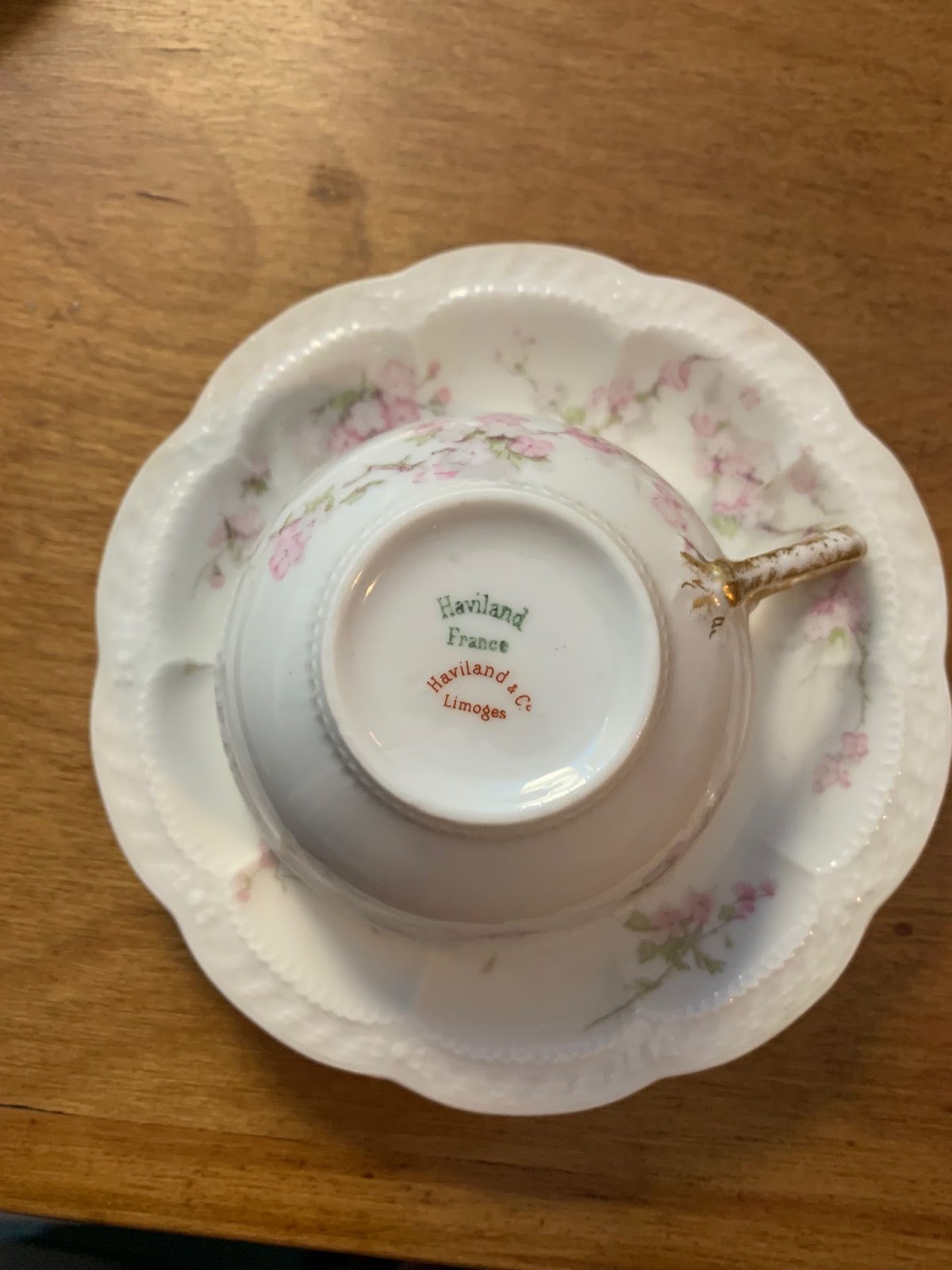
    There are two sets of marks (this was not a mistake!), there are marks that are made prior to glazing and then marks made by the decorator after the glazing. You can see here on this cup the green underglaze mark, which is Mark I that was used between 1894-1931 and the red decorator mark, which is Mark c, used 1876-1878/1889-1931. So we’ve narrowed to 1894-1931. Can the flower pattern help us at all in the identification?


    Schleiger Numbers


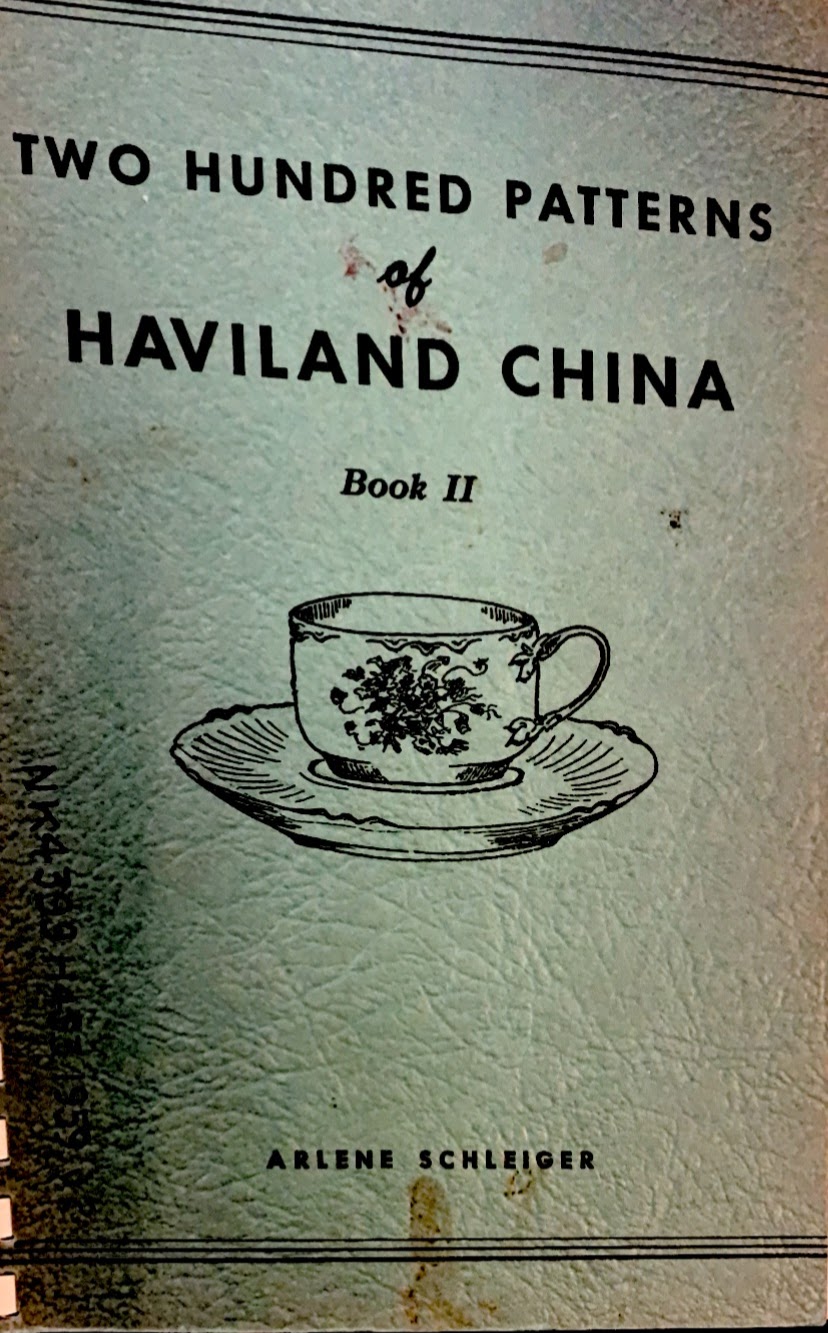
    It turns out that there are estimated to be over 30,000 different Haviland China patterns created by the 1930’s and most did not have a name and very few even had a number. According to the A Pattern Identification Guide for Haviland China: Volume Two by Gertrude Tatnall Jacobson (1979) only 725 of the patterns had a name. These 30,000, though, are just variations and combinations of blanks, flower patterns, and use of gold/silver trim. Because there was no easy way to catalog these, an amazing collector, Arlene Schleiger, decided to try to do it. She, with the help of her talented architect son, provided hand drawings and descriptions for nearly 11,000 of these patterns. She produced 6 volumes of these amazing books beginning in 1950 through 1991. One amazing benefit of working at a university is the library collection. It turns out that my university had the first 4 volumes of her books!! Unbelievable luck!


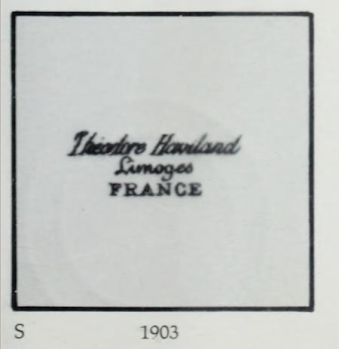
    Using her guide, I was able to identify one of the 4 sets. It is a Theodore Haviland set BL 205 (blank #205) Pattern # 248, described “Small pale pink flowers touched with white. Some all white. Green leaves and stems. Gray shadows around flower groups.” (p. 48, Volume II) An additional investigation into the mark suggested S, 1903. (https://archive.org/details/havilandchinavol00gert/page/157/mode/2up?view=theater). 

    Unfortunately, I couldn't find the other 3.


    Replacement, Ltd.

    I contemplated joining the HCIF, but thought I would try one other source recommended by the organization. Have you ever broken, chipped, or lost a piece of your everyday plates or your fine china or crystal or sterling and found that it was discontinued? But you really wanted to replace the piece? Well, there is an organization that began in 1981 called..you guessed it…Replacements, Ltd that went into business collecting and distributing replacement pieces. You need to know your manufacturer and then pattern name to really be successful, but once you do their search engine brings up a photo of your item. For example, our everyday plates we chose before our wedding in 1990 are the Poetry pattern from Pfaltzgraf. It was long-since discontinued but if we wanted to, we could replace all of them!


    Although I could have paged through all of the Haviland patterns it would have taken weeks! Instead I ordered from Replacements, Ltd the book Haviland: A Pattern Identification Guide (no, our library didn’t have this one, so I invested in the book–I was hooked now). This 577-page book includes photos, pattern names for those that had names,  the Schleiger #s and Blank #s. After pouring over the china and the book for just 3 days, I was able to identify two of the other patterns! 


    So, whose were they?


    I am now asking myself, what did this GIANT rabbit hole (and huge investment of time and money) gain me? Am I any closer at figuring out whose they were and how they came to be with my grandparents?


    Well, given the Theo Haviland patterns were around 1903 (based on the mark), I am pretty convinced that none of these were wedding china for my grandparents…and I have no idea whose they were…I’m leaning toward the theory that my grandfather just picked up them random places to make the china cabinet look pretty.


    But…


    Remember how I said that 5 patterns were Haviland and the 6th and 7th was Zeh Scherzer? Well, using my skills in porcelain developed through investigating the Haviland patterns, I think I figured out who these sets might have belonged to. 


    Zeh Scherzer (Z S & Co) was a porcelain producing company located in Bavaria, Germany that began in 1880. Their marks changed over the years and the mark that we see on our china was used from 1899-1910. I haven’t found the exact patterns (there doesn’t seem to be a collector’s club for this china) but given the timing, I would say that this was perfect timing for my great-grandparents Alonzo Sedlock and Louisa Hillman who were married 18 May 1904. Louisa’s parents were both from German families, her father (Johann Willheim Hillman) immigrating in 1879 from Bremen, Germany and her mother (Emma Amanda Sackman) was born in Germania, Potter County, Pennsylvania but her older siblings were born in Hamburg, Germany (Emma was my last week’s post.). According to newspaper accounts of Louisa in the social columns, she was a socialite and it would not be surprising to me that they were given china for their wedding. 


    So, I am going out on a limb and conjecture that the 11 plates and 4 cups/saucers and 6 small plates were gifts to Alonzo and Louisa Sedlock for their wedding.


    We probably won’t ever know the real story of this mysteriously appearing china but for as long as we own our current house, it’s a beautiful addition to the shelves and I don’t mind using the china for entertaining. In fact, this past weekend, I used several platters for our DAR Special Tea!

    America250-Revolutionary War Patriots --#6--Lt. Caleb Hopkins

    Jim’s 5th great-grandfather, Lt. Caleb E. Hopkins (1749-1824) DAR (#A047932) served as a Lieutenant Revolutionary War Patriot.  He was the s...