Thursday, March 14, 2024

Silver, Spoons, & Souvenirs

Dad, Mom, and Me traveling with 
our station wagon in the background.


 Souvenirs

When I was a little girl, my parents loved to take my sister and I traveling. We usually drove to our vacation destinations using our trusty Chevy station wagon with the fake wood paneling sides (there was more than one!). This was the time before seatbelt laws and if we were traveling late at night (or through the night!) the back seat folded down and we could unroll our sleeping bags and sleep prone in the back. It was also before air conditioning, but the windows rolled down (using our arm muscles to rotate the knob) all the way flush with the door to give us plenty of wind!! 


Souvenir shops were a big thing and you could buy pencil cases or t-shirts, things that won’t really last the test of time. I’m not exactly sure who gave my mom the idea, but for each place–mostly states, but some cities–she encouraged me to buy a spoon as my souvenir. I collected them well into my 30’s and filled two huge spoonracks which later included countries and European cities.  I don’t display them anymore, but I still own them. There are a few special and really interesting ones, but most of them are still pretty cheap souvenirs. 


Spoons


A friend of mine shared with me that she has started taking 10-15 minutes each day to purge 3 things from her house. She goes to a drawer or cabinet everyday and finds at least 3 things to donate or toss. That sounded like a great idea to me and while I will not commit to doing this everyday, I’m happy to do it on the weekends. One weekend a couple weeks ago, I chose a cabinet in our built-in china cabinet. I quickly and easily found 3 items to donate and toss, to be honest I found lots more than 3!! 

I did also find a bag of silver trinkets that had been passed down to me from my grandmother through my mom. What a find, and what fun I had!! The internet is an incredible resource and it was well used that day as I was tracking down companies, dates, and patterns. There were some unique items, like my grandmother’s Japanese Sterling Silver 950 Demitasse Bamboo Spoons Set. I don’t know for certain, but I’m going to guess that these were purchased in the 1950’s when my grandfather was stationed in Japan and my grandmother and mother were with him. My grandmother talked about the entertaining she would do (usually with the military families) and how far the American dollar went in Japan at that time. 


The real fun for me  began when I came across….my great-grandmother’s (Florence Stoddard Leach) souvenir spoon collection!  (Note: This 15 minute task became an 8-hour funfest, the real reason why I’m not going to commit to this everyday!) I remembered seeing, years ago, a silver spoon engraved with “Flossie” (her nickname) and 1901. You might remember from an earlier post about the Buffalo Pan-American World’s Fair, that my great-grandmother graduated from Reed City High school in 1901, so I imagine this was to commemorate that occasion. 

Reed City High School c. 1900

What I didn’t remember is the approximately dozen other silver spoons from different places and times in her life. I’m not done cataloging and researching all of them, but in the process I’ve learned a few things that might be helpful to others with their silver identification.


Silver


Fish slicer

My great-grandmother, Florence, was born in 1882, so I imagined that most of the spoons were collected or given to her early in life. Her husband died in 1919 and I can believe that her traveling days with two young children were over and resources a little slimmer. This does still create a 40 year window to date them. Unlike my souvenir spoons, these were all sterling silver!


I found an incredibly robust website that was helpful because not only does it provide a catalogue of companies and their histories but also images of many of their maker’s marks. Quite honestly, anything that was ever made from silver from most countries in the world can be found here, including flatware patterns, egg boilers/coddlers, fish slicertankard (became a beer mug), waste bowls, and, yep, even nipple shields!  (I will leave that last one for you to look up, or just imagine.)


(Some examples of maker's marks).

It was fun to search the images and look for which company produced which spoons to help date them. Here’s one from Saginaw Michigan. It is identified as having been produced by the Alvin Co, using the silver marking emblem. Created as Alvin Mfg. Co. in Invington in 1886. Moved to Long Island NJ in 1895. Name changed in Alvin Silver Co. in 1919. Now a division of Gorham Corporation. 


One, which is from Buffalo, NY was not an official Pan-American souvenir spoons, but I wouldn’t be surprised if it wasn’t purchased at that time in Buffalo.


And this one from Toronto. I’m thinking this one might be from their honeymoon in which they spent 6 weeks traveling to New York City and probably went through Canada on the way.


Or this one, was engraved with “L” for Leach in 1907 on a Reed & Barton sterling silver Parisienne pattern spoon. They were married in 1905 and had their first child, Virginia, in 1906 who died in 1908. I have no idea the significance of the date.


Or this one, which is haunting me because I have no idea what it could mean. It says “Ireland” and also “1000 Islands”. I don’t see how they are related, but I’m pretty sure that this was during their honeymoon that they stopped to the 1000 Islands! I’m fairly certain that they were still British islands and maybe there was an island named Ireland? The Islands were a popular tourist attraction in the Victorian era and has inspired me to plan a trip for my husband and I this summer to see 2 of the castles still on the islands.


But the most fun one was this spoon. Not so much because the spoon is beautiful, but because I have discerned where it was from. At first glance, I saw “mining” and assumed it was another spoon from the Michigan College of Mines, where my great-grandfather attended. But on closer inspection, I found that it was labeled “Mines & Mining Building”. I learned from my research on the Pan-American World Fair that a mines & mining building was a common feature at a World’s Fair. So, was this a spoon from the 1901 Buffalo Pan-American World Fair? After much research and searching, no!! It is from the 1893 Chicago World’s Fair!! I have no idea who went to that World Fair or how this spoon came to be in Florence’s collection, but maybe it was what sparked her curiosity in the World Fairs? 

Mines & Mining 
Building at the 1893 Chicago World Fair
Depiction of the Mines & Mining Building

This provided me with a day's worth of fun and learning about the history of silver, spoons, and souvenirs! Investigating the history of the spoons and my great-grandmother's collection is providing a glimpse into her travels and her life around the turn of the last century!!! I guess if I can't have photos to chronicle her life, souvenir spoons isn't such a bad substitute. 

Saturday, January 20, 2024

The Amazing Power of Newspaper: Part 3

 Memorializing a Wedding


Elizabeth Leach & Walter Tubbs
November 1937 
Nowadays weddings are memorialized by digital images and transmitted across the world in an instant. We have FaceBook, usually used now by the parents of the wedded couple, or TikTok, Instagram or any other number of social media outlets for the couple themselves. There is video, audio, and photographic images by professionals and now everyone with a phone shares with the world. 


When I was married in 1990, my wedding was memorialized by a professional photographer, a family friend who loved photography, and disposable cameras (with film) set at tables for the truly candid snapshots. I have a beautiful album and scrapbook with photos of all my family and friends in attendance. We shared with the rest of the world through a wedding announcement in the newspaper but it was a bare minimum description and a black-and-white grainy newspaper photo. Against my husband’s wishes, we do also have a video, but it has rarely been viewed for fear of shattering the memory of the “perfect day”!


But in 1937, when my grandparents, Walter Elliot Tubbs and Elizabeth Anna Leach, were married, all that was left to memorialize the day is one photo. Her dress still exists and a few summers ago, one of my daughters tried it on. My grandmother was 5’9” and very thin when she was married, so it’s not a dress that many people would fit into!


How Historical Newspapers Help Memorialize a Wedding


In my search for my great-grandmother (Florence Stoddard) through the Osceola County Herald (See The Amazing Power of Newspaper: Part 1), I found an article about my grandparents wedding in 1937. And boy is it a find!  The descriptions are so vivid that one can almost imagine being there. Because I know the print is so small on the Blog, I am transcribing it here for your appreciation, with a little commentary  in the right hand column:


Elizabeth Leach Is Bride of W. Tubbs in Pretty Ceremony

____

FORMAL LOUNGE OF CHARLES McKENNY HALL IN YPSILANTI SCENE OF WEDDING

  The formal lounge in Charles McKenny hall on the campus at Michigan State Normal college in Ypsilanti was the scene of the marriage Saturday afternoon, December 4, of Miss Elizabeth Ann (sic) Leach, daughter of Mrs. Florence Stoddard Leach of Ypsilanti, and Walter Elliott (sic) Tubbs of Detroit, son of Mr. and Mrs. Walter Tubbs of Ann Arbor.

    Seven-branched candelabra with lighted white tapers on either side of the window in the south bay separated by palms and abundant ferns showing red for the approaching holiday season were included in the attractive decorations of the lounge.

     Theophilus Fenker of Ypsilanti sang “At Dawning” by Cadman, accompanied by Miss Eleanor Hutson before the entrance of the bridal party.

    To the strains of the Lohengrin wedding march the bridal procession came from the room to the north and walked down the long room led by the ushers, Harlow Tubbs of Detroit, brother of the groom and John Judson of Ann Arbor, brother-in-law of the groom.

   The bridesmaids, Mrs. Robert Knight of Ann Arbor and Mrs. Henry Lewis of Dearborn followed. Miss Marie George, maid of honor, was followed by two little flower girls, Lois Tubbs of Detroit and Sally Judson of Ann Arbor, nieces of the groom. The two girls scattered flowers along the path of the bride who was accompanied by her brother, Clay Leach of Detroit.

    At the south bay they were met by the groom and best man, Frank Shuda, and the clergyman, Dr. Harvey C. Colburn, who read the marriage ceremony.

   During the ceremony Miss Hutson played “O Promise Me” by DeKoven and “I Love You Truly” by Carrie Jacobs Bond.

    The bride was lovely in a gown of white satin made on princess lines with full oval train. A row of white satin buttons reached from the next of the gown in the back to the waist. Pearl trimming edged the high collar and the long tight sleeves. She wore her mother’s long bridal veil of white tulle which was attached to the white satin Juliet cap trimmed with beads. The bride wore white satin, toeless sandals and carried white roses, sweet peas and little lilies of the valley confined with white satin ribbon.

    The gowns of her attendants were distinguished by high necks and long sleeves and were floor length. Miss George wore dubonnet velvet with a hale of the same color and a chin-length veil. Her flowers were yellow and brown chrysanthemums tied with brown ribbon streamers. She wore matching slippers. Mrs. Knight and Mrs. Lewis were gowned alike in royal blue velvet with matching halos and chin-length veils and wore matching slippers. Their arm bouquets were composed of yellow chrysanthemums tied with streamers of yellow ribbon. The flower girls were dainty in blue silk.

    Mrs. Leach, the birde’s (sic) mother, wore a long dress of royal blue velvet. The groom’s mother was dressed in black lace. Both wore corsages of white roses and pink sweetpeas.

    The bridal party and the bride’s mother and the groom’s parents were in the receiving line at the reception which followed the ceremony. The table from which the buffet luncheon was served was very lovely with silver candlesticks holding white tapers at each end and white chrysanthemums laid ion the snowy damask between the candlesticks and the four-tiered wedding cake surrounded by two white doves. Ice cream moulded in wedding bells was also served.

      For going away on the honeymoon Mrs. Tubbs wore a gray wool tweed suit collared in wolf. Her hat and blouse were of varsity blue, while shoes, gloves, and purse were gray.

      Mr. and Mrs. Tubbs will reside in Detroit where the groom is employed by General Motors corporation. He and his bride both attended Normal college and later Mr. Tubbs took a business course at Cleary college in Ypsilanti. Mrs. Tubbs studied in the University of Michigan.

    Out of town guests of interest to residents of this vicinity included: Mr. and Mrs. H. D. Cowan and Mrs. T. R. Welsh of Grand Rapids; Mr. and Mrs. John Bielby of Dearborn; the Misses Mae and Alice Arnold of Toledo, Ohio.

McKenny Hall was built in 1931 as the first student union. It still exists at 878 W. Cross Street in Ypsilanti on (now) Eastern Michigan University’s campus. My parents met at EMU and this was still the union in the late 50’s & 60’s when they were there. 


-Not sure the relationship of Theophilus but he was a young man of 22. The song can be listened to at: At Dawning (1906)


-Mrs. Robert Knight was Virginia Bell Slep of Saginaw (Robert died serving in WW2)

–Mrs. Henry Lewis was Jane Washburn (Henry was a teacher at Ypsi high and later Dearborn)

–Marie George went to Michigan Normal College and was a freshman in 1933 with Betty

-Lois was Harlow’s daughter who died three years later after being hit by a truck crossing a road, Sally was Aunt Helen’s daughter


-Listen to Reginald de Koven : Oh, Promise Me! (arr. James H. Rogers) and “I love you truly”


-At the time when my daughter tried on the veil, we had no idea that it was actually my great-grandmother's veil from her 1905 wedding!

-Since her father was deceased her brother Clay ushered her down the aisle.


These were all people who had a connection to Reed City. The Arnold sisters were both teachers and originally born in Reed City, likely friends of Florence.

Tuesday, January 16, 2024

The Amazing Power of Newspaper: Part 2


 Although I love family history, I have not been the best student of history. I consistently rely on my husband for that! He would tell me that history is just the world’s greatest gossip column. But the way I was taught history, it was just names and dates that carried no meaning for me. As I’ve grown older, I recognize how important history is, especially for not repeating the past!
Florence Mary Stoddard c. 1906


I have also learned that old Newspapers provide me not only a glimpse into the past but also the desire to learn more about events that happened in the world.

Here’s an example. When I started searching for my great-grandmother Florence Stoddard in the newspapers, I came across this…

I found this interesting for so many reasons! The first is, what relatives were they visiting in Canada?! I actually have no idea because the only relatives that I thought we had in Canada were on Edward Leach’s side, but in 1901 Florence hasn’t met Edward yet! That is an exploration for another day.

The second interesting thing is, the timing. Florence graduated from Reed City High School in June 1901. I’m wondering/guessing that this trip might be a graduation present or a trip prior to starting college at Olivet College. Mrs. H. L. Foster is the older sister to my great-grandmother and I’m guessing that two sisters were off having fun together.

The third thing that caught my eye was the Pan-American Exposition. Maybe you know your history much better than I, but I had no idea what this was! I was familiar with World’s Fairs, but this one was new to me.

I Googled it and the first thing that came up was this Wikipedia entry:

Along with this photo:


In 1901, this electrification would have been an amazing site to witness. According to Encyclopedia.com,  electricity was commercially available in the 1880s, but it was not widespread. The infrastructure for providing electricity to homes hadn’t really developed yet. Only 2% of the US would be electrified by 1910! (citation) Florence and Anna would have probably been mesmerized by the lights and the people! During the 5-month exhibition over 8 million people attended, that turns out to be an average of more than 50,000 people per day in a 350 acre space. For two young women from a town of 2,000 people and 1,366 acres that must have seemed unimaginable!


Unfortunately, I don’t have any photos specifically of them from that visit, but the Library of Congress has a wonderful collection including MOVIES by Thomas Edison, Inc. (Side note--if you are looking for photographs covering important historic events the Library of Congress has an incredible repository and they are freely available as long as you cite them). Here are some still photographs taken at the event. The first is of the Temple of Music, where no doubt my great-grandmother would have gone because she was a keen lover of music and sang soprano in many choirs over her life.

Arnold, C. D., photographer. (ca. 1901) Temple of Music. New York Buffalo, ca. 1901. [Photograph] Retrieved from the Library of Congress, https://www.loc.gov/item/99472510/.

and illuminated at night:

Arnold, C. D., photographer. (ca. 1901) Temple of Music (at night). New York Buffalo, ca. 1901. [Photograph] Retrieved from the Library of Congress, https://www.loc.gov/item/99472509/.

Here's one that shows the people milling about:

(ca. 1901) Electric Tower. , ca. 1901. [Photograph] Retrieved from the Library of Congress, https://www.loc.gov/item/2002706241/.


In terms of silent movies, there were several to choose from! I wanted to include an amazing 11 minutes long tour boat ride around the entire fair, but the size of the file exceeds what I can upload. I highly encourage you to check it out: https://www.loc.gov/item/00694338/.. If you didn’t know, everything (buildings, bridges, etc.) you see was temporary! It was built intentionally for this Pan-American Exposition and it was all (except for the New York State Building, now the Buffalo History Museum) was demolished in 1902.


But I have included a short movie of part of the buildings in the day and then lit at night.


Map of Pan-American
at https://panam1901.org/index.html
Porter, E. S., White, J. H., Smith, J. B., Thomas A. Edison, I. & Paper Print Collection. (1901) Pan-American Exposition by night. United States: Thomas A. Edison, Inc. [Video] Retrieved from the Library of Congress, https://www.loc.gov/item/00694346/.

I was looking for a map of the whole exhibit and there are many out there, but in doing so I came across the most AMAZING website, created by Susan J. Eck called "Doing the Pan.." (https://panam1901.org/index.html). After you go there, navigate to "Table of Contents" and you will see that the site is huge and you can learn nearly anything about the entire exhibition, from what meals (with menus) were offered, to the headlines in the newspapers for each day of the exhibition, to the souvenirs someone could buy. 

And you might have read in the opening description that this was the site of the shooting of President McKinley! He was shot on September 6, 1901 and unfortunately succumbed to the two bullets on September 14th. On September 5, he was celebrating President's Day at the Exposition and gave an address. Here is a photo from the address and the program cover for the day. 

This one little newspaper clipping led me to learning so much about this particular 5-month event, but honestly so much about American history...too much to include here. As my kids would say, 10 out of 10!


Thursday, December 7, 2023

The Amazing Power of Newspapers: Part 1

Edward J Leach and Olivet Athletes
One summer, during college, I read Irving Stone’s very thick The Agony & Ecstasy, a biographical novel of Michaelangelo’s life. I now don’t remember much of the book, but there’s an image and description that has stayed with me for over 30 years. It was about Michaelangelo’s philosophy of sculpting. It went something like this, a masterpiece already exists inside the marble and his job was to remove the bits of marble surrounding it in order to allow the masterpiece to emerge. Sometimes he would be in a rush and hit it just wrong so that the piece of marble just fell apart into pieces, but other times as he was delicately and patiently chipping away, the masterpiece would emerge and be revealed in its full glory. 

 I see a parallel to this in my family history search. I think too often I approach with the smash and grab because I’m not patient enough to follow through on a research plan. So I end up with lots of broken marble (or lots of paper and boxes strewn about my room) that can’t easily be put back together in a useful way. And I have nothing really valuable to show for my time and effort. 


 Newspaper Resources 
 This week was a little different and my patience has paid off! And some true treasures were found in newspaper articles. (I found so much that this is going to be the first of several blogs!) The March/April 2023 edition of familytree Magazine included a Special Edition on Historical Newspapers. This is a keeper issue! It highlights FIVE newspaper websites (some free and others require a subscription): Newspaper.com: https://www.newspapers.com/ 
(familytree Magazine, March/April 2023) 
NewspaperArchive: https://newspaperarchive.com/ 

 For research in Michigan, though, I want to recommend another site, and that is Central Michigan Digital Newspaper! I was following a path for some research related to the Bailey family. In a search for articles about a Hazel Ione Bailey who married a man with the last name French I was trying different permutations of her name (always very important in newspaper searching, sometimes women are only referred to with their husband’s names like, Mrs. Herbert French or even Mrs. HR French) and I came across a woman named Hazel French but she was in Osceola County. Now, “my” Hazel Bailey never lived in Osceola County but the hits that came up were in a newspaper that I did not know existed and it WAS the place where my grandmother and her mother lived! 

 Chipping Away 
 For three consecutive nights, I chipped away in my search process and what emerged was beautiful and amazing…and such a surprise! My great-grandmother, Florence Mary Stoddard married her husband Edward James Leach in 1905. I have written about both of these people in previous blogs (A Journey in the Making, “Notions and Fancy Goods”, and Names and Naturalization). I personally knew my great-grandmother Florence because she lived to age 91, but I never met her husband E. J. Leach. He died in 1919 when my grandmother was 5 years old. My grandmother, Elizabeth, barely remembered him and piecing his life together has been a big part of my family history journey. His father is one of my Brick Walls and I continue to yearn to learn more. 

 I spent a concerted effort to search through the Osceola County Democrat found on the Central Michigan Digital Newspaper Repository and I have been rewarded!! Osceola County is not a heavily populated county in Michigan, in fact if you’ve seen the movie or heard the story “Jerry and Marge Go Large”, the town where Jerry and Marge live is Evart, Michigan in Osceola County and is the next town to the east of Reed City (about 13 miles), you might then understand the size of these communities. 

Reed City is where my great-grandmother was born and her father and uncle owned Stoddard & Bros hardware and mill supply store in the town, so they were well known and local celebrities. As such, they were big fish in a small pond and their names graced the society columns of the newspaper. I thought I had searched the newspapers, but with this new newspaper, I learned I had only just begun. 

 Most Exciting Find 
While I was searching through permutations of my great-grandmother’s name, “Florence Stoddard”, I came across things I knew, like she attended Olivet College after her graduation from Reed City High School in 1901. I also knew that she met my great-grandfather, Edward James Leach at Olivet College and they married in 1905. I had no idea, though, that EJ Leach attended any other colleges other than Olivet and possibly Michigan College of Mines, so when I read the following newspaper, I couldn’t believe my eyes! 


Earlier (in A Picture is Worth MORE than 1,000 words!”) I shared how I found a photo of him as a student at Olivet and later learned through a search at the Olivet Archives a variety of activities he was involved in, including the Track & Field team, where he won 1st Place (there is a story there!) in the MIAA Tournament. So when I saw that he was visiting my great-grandmother on his way down from Houghton (in the Upper Peninsula) to Lansing (Reed City is right on the way!) where he was attending the Michigan Agricultural College, I was gobsmacked! 
He attended MAC, now known now as MSU (Michigan State University). The next morning, I checked with the Michigan State Archives and they confirmed that he was an Engineering student in his freshman year for the 1903-04 years. He apparently doesn’t show up again in their rosters after that, but I currently have a query with the Registrar’s Office. Tonight I did also search and found the Class of ‘05 MAC Yearbook, in which he is listed as a Freshman (Class of ‘07) and I found a picture of him as part of the Eclectic Society (a literary society nicknamed “The Tic” which later became Alpha Tau Omega fraternity. 

 After searching her various permutations (like Flossie, her nickname) and also Edward’s name, I could see their courtship unfold and eventually by paging through (don’t know why the search didn’t work!) I found their wedding announcement. I have no photos from their wedding, so these descriptions are precious! 


 And unfortunately after just 14 years of marriage, Edward’s Obituary. 


And Florence's return to college at Central Michigan University to earn her teaching certificate in 1922. Old Newspapers are definitely worth the time and effort, especially if you know your relatives had financial resources, standing in the community, or were infamous (that’s another story for another time!).


This is truly an amazing opportunity to fill in gaps for some members of my family!

Monday, November 20, 2023

A Quest Completed!

Don’t we all love a good mystery? I think that’s why I love family history so much! It’s a quest for me, where the journey is as much fun as reaching the goal.
My bisnonno in his Italian Army 
uniform, c. 1897

What was my recent quest? It was finally finding the military records for my great-grandfather (bisnonno) Emanuele Antonio Mazziotti!! If you’ve read my other blogs, you know he is a constant feature, since his early life is a big mystery to me. He was orphaned by his family by being “left on a wheel” in Villa San Giovanni as a day old infant and family lore has him shipped off to Switzerland and raised by nuns until he became a foster child of the Bellantoni family in Scilla, Italy. My daughter found his birth record in 1876 after searching tirelessly page by page through Antenati (the incredible site for the best town birth, death, and marriage records) Villa San Giovanni records. Supposedly Grace Bova (Bellantoni) favored him over her own sons so he left to fight in Africa with the French Foreign Legion. Well, that was the story. What have I learned? I know that he came to America in 1900 according to his ship manifest, but what happened to him between 1876 and 1900 remained a mystery. So off on a quest I went!

Scilla, Italy
October 2023

My Quest
A few weeks ago, I went to Scilla, Italy to search for his past!! It was a surreal experience because I lived for a week with a genetic cousin (we don’t actually know how we are related, but we share 26 cM of DNA!), Carolina, who hosted me and another cousin, Cas, for the week at her home. Googletranslate worked wonderfully for us and Carolina was incredibly valuable to me as I plotted my adventure to search out my family’s history. The trip was absolutely amazing and I have so much to process and share, but here I will just talk about my quest to secure my bisnonno’s military records. (A colleague of mine directed me to military uniforms several years ago, where I learned that his uniform was NOT French foreign legion and it WAS Italian Army.)

Prior to Going
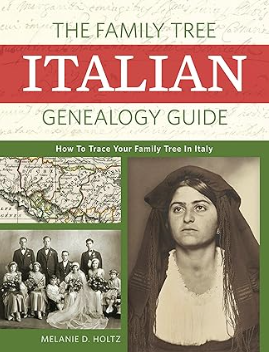
In preparation for this trip, I chose to take a course offered through the Family Tree University called "Find Your Italian Ancestors". It was a good course and I would recommend it, although I do have some serious critiques (such as some of the lessons have not been updated and some references to websites and resources are seriously outdated). The instructor for the course is Melanie D. Holtz, who encourages you to purchase her book The Family Tree Italian Genealogy Guide. I do highly recommend this book if you have Italian family research, I appreciate that it includes both instructions on how to locate records in Italy and also sample template correspondence. I used these sample templates when I wrote to the Archivo di Stato in Reggio Calabria to understand their policies on making appointments and requesting information.


Archivo di Stato di Reggio Calabria

Cas and I took the 20-minute train to Reggio Calabria from Scilla and back for less than 6 Euros! The archives was about a 25 minute walk from the train station and surprisingly was tucked up on a hill in a fairly residential area. I was one of 5 researchers in the Reading Room and the only one who didn’t speak fluent Italian. Although the head archivist was not excited to help me and treated me much like I had read about—(in other words, she found my request burdensome)–the younger female workers tried very hard to help me.

I FOUND IT!!

And it is filled with wonderful information that I'm still processing. It is officially called his Fasciolo Matricolare, which are his personal military records. It includes a description of his physical features, like his hair and eye color were described as chestnut and his skin color was tanned and he was 1.645 meters tall (64.8 inches). It was not suprising that his father was listed as "Ignoti" (unknown) but his mother was listed as Grazio Bova ("nutrice"--which is nurse)!!


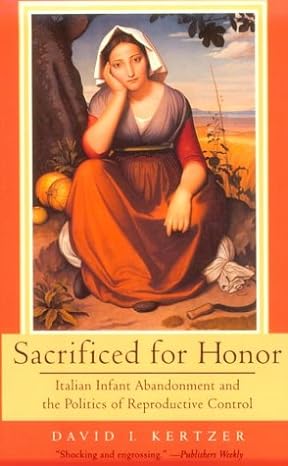
I’ve been reading a book, Sacrificed for Honor: Italian Infant Abandonment and the Politics of Reproductive Control (1993) by Brown University professor David I. Kertzer. In 1863, the highest rate of abandonment was in southern Italy, specifically in Sicily and Calabria (where my bisnonno was raised). The rates of abandonment were over 5% of newborns and the mortality rate was over 50%! Women from the communities were paid to be wetnurses for the babies and those babies who weren't matched were less likely to survive. I'm really glad that my bisnonno was among the lucky ones to be matched with a wetnurse and to survive!  Sacrificed for Honor: Italian Infant Abandonment and the Politics of Reproductive Control

This suggests that Grazia (Grace) was his wetnurse and chances are that he was raised in the home along side their other children and he was with them until he served his required military service in the Italian Army. The document provides the accounting of where and when he served and what he did. So, Where did he serve? Africa!!

So, like most family lore…some is true…and some is not! And it was a LOT of fun figuring out which is what!

America250-Revolutionary War Patriots --#6--Lt. Caleb Hopkins

Jim’s 5th great-grandfather, Lt. Caleb E. Hopkins (1749-1824) DAR (#A047932) served as a Lieutenant Revolutionary War Patriot.  He was the s...