Monday, November 20, 2023

A Quest Completed!

Don’t we all love a good mystery? I think that’s why I love family history so much! It’s a quest for me, where the journey is as much fun as reaching the goal.
My bisnonno in his Italian Army 
uniform, c. 1897

What was my recent quest? It was finally finding the military records for my great-grandfather (bisnonno) Emanuele Antonio Mazziotti!! If you’ve read my other blogs, you know he is a constant feature, since his early life is a big mystery to me. He was orphaned by his family by being “left on a wheel” in Villa San Giovanni as a day old infant and family lore has him shipped off to Switzerland and raised by nuns until he became a foster child of the Bellantoni family in Scilla, Italy. My daughter found his birth record in 1876 after searching tirelessly page by page through Antenati (the incredible site for the best town birth, death, and marriage records) Villa San Giovanni records. Supposedly Grace Bova (Bellantoni) favored him over her own sons so he left to fight in Africa with the French Foreign Legion. Well, that was the story. What have I learned? I know that he came to America in 1900 according to his ship manifest, but what happened to him between 1876 and 1900 remained a mystery. So off on a quest I went!

Scilla, Italy
October 2023

My Quest
A few weeks ago, I went to Scilla, Italy to search for his past!! It was a surreal experience because I lived for a week with a genetic cousin (we don’t actually know how we are related, but we share 26 cM of DNA!), Carolina, who hosted me and another cousin, Cas, for the week at her home. Googletranslate worked wonderfully for us and Carolina was incredibly valuable to me as I plotted my adventure to search out my family’s history. The trip was absolutely amazing and I have so much to process and share, but here I will just talk about my quest to secure my bisnonno’s military records. (A colleague of mine directed me to military uniforms several years ago, where I learned that his uniform was NOT French foreign legion and it WAS Italian Army.)

Prior to Going
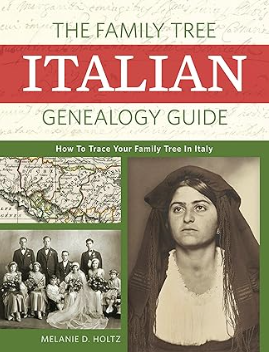
In preparation for this trip, I chose to take a course offered through the Family Tree University called "Find Your Italian Ancestors". It was a good course and I would recommend it, although I do have some serious critiques (such as some of the lessons have not been updated and some references to websites and resources are seriously outdated). The instructor for the course is Melanie D. Holtz, who encourages you to purchase her book The Family Tree Italian Genealogy Guide. I do highly recommend this book if you have Italian family research, I appreciate that it includes both instructions on how to locate records in Italy and also sample template correspondence. I used these sample templates when I wrote to the Archivo di Stato in Reggio Calabria to understand their policies on making appointments and requesting information.


Archivo di Stato di Reggio Calabria

Cas and I took the 20-minute train to Reggio Calabria from Scilla and back for less than 6 Euros! The archives was about a 25 minute walk from the train station and surprisingly was tucked up on a hill in a fairly residential area. I was one of 5 researchers in the Reading Room and the only one who didn’t speak fluent Italian. Although the head archivist was not excited to help me and treated me much like I had read about—(in other words, she found my request burdensome)–the younger female workers tried very hard to help me.

I FOUND IT!!

And it is filled with wonderful information that I'm still processing. It is officially called his Fasciolo Matricolare, which are his personal military records. It includes a description of his physical features, like his hair and eye color were described as chestnut and his skin color was tanned and he was 1.645 meters tall (64.8 inches). It was not suprising that his father was listed as "Ignoti" (unknown) but his mother was listed as Grazio Bova ("nutrice"--which is nurse)!!


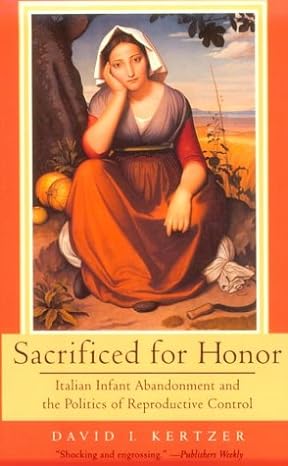
I’ve been reading a book, Sacrificed for Honor: Italian Infant Abandonment and the Politics of Reproductive Control (1993) by Brown University professor David I. Kertzer. In 1863, the highest rate of abandonment was in southern Italy, specifically in Sicily and Calabria (where my bisnonno was raised). The rates of abandonment were over 5% of newborns and the mortality rate was over 50%! Women from the communities were paid to be wetnurses for the babies and those babies who weren't matched were less likely to survive. I'm really glad that my bisnonno was among the lucky ones to be matched with a wetnurse and to survive!  Sacrificed for Honor: Italian Infant Abandonment and the Politics of Reproductive Control

This suggests that Grazia (Grace) was his wetnurse and chances are that he was raised in the home along side their other children and he was with them until he served his required military service in the Italian Army. The document provides the accounting of where and when he served and what he did. So, Where did he serve? Africa!!

So, like most family lore…some is true…and some is not! And it was a LOT of fun figuring out which is what!

Saturday, September 9, 2023

A Church, A Cemetery, and a Surprise!

Sometimes in an effort to learn something more we find interesting new mysteries to solve along the way!

My sabbatical has ended unexpectedly early, so I am likely to not post as frequently, but on my last day before starting back to work, my father and I had a wonderful excursion to Detroit, Michigan. I had offered to take him to the church where Reverend Lyster once preached and has a stained-glass window dedicated to him, and go to the cemetery of his final resting place. (Reverend Lyster is not a relative, but he is someone my father has investigated because he once owned the land–in the 1830’s–we live on in the summers and was quite a remarkable man.)


I was also interested in going because of my maternal grandmother’s grandfather, Rodman Stoddard, who migrated to Detroit in 1829 and once owned 160 acres in Detroit between Plymouth and Joy Roads was buried in the same cemetery. (The darker shaded orange in the map below is the 160 acres he once owned!)

Christ Church of Detroit


One can not assume that a church will be open to visitors mid-week, so it is always wise to contact the church in advance. Fortunately, I had contacted Christ Church over a week before we planned to go and talked with a church secretary. She was lovely and was interested in our reason for touring the church. Since it is an Historic landmark in Detroit, being the longest continuously serving church location in Detroit, they are used to people coming to look at it. She even offered to look in their archives for any additional information on Reverend Lyster in preparation for our visit.

When we arrived she was prepared to show us the “Lyster Window” which is famous not just because Reverend Lyster’s image was used in the window, but is part of a collection of stained glass windows made by Munich company Franz Mayer & Co. in 1905. It is also called “Suffer the Children” window and includes the likeness of several family members.

Christ Church is beautifully maintained and the stained glass windows around the church were an amazing collection that spans nearly 100 years, including two Tiffany windows and a more recent window donated in the 1990s. Our guide showed us another window that had been given in honor of Reverend Lyster that we hadn’t known about. As we toured the building, she provided us other insight about the history of the building and the congregation. She also provided the book, Christ Church, a history of the church by one of the pastors. It was a lovely gesture and my father has thoroughly enjoyed reading the chapter devoted to Reverend Lyster.


Elmwood Cemetery

We then traveled several blocks over to the historic Elmwood Cemetery. This is a beautiful space that is historic but is an active cemetery with recently interred people. Their website provides this history:


“We are the oldest continuously operating, non-denominational cemetery in Detroit. The cemetery was established in 1846 and incorporated in 1849 as a non-profit corporation by an act of the Michigan Legislature. Founded by some of early Detroit’s leading citizens, Elmwood quickly expanded from its original 42 acres to its current size of 86 acres and became the final resting-place of tycoon and laborer alike.” 


In addition, in 1890, Frederick Olmsted (landscape architect who designed Central Park in NYC), was contracted to redesign the cemetery and laid the foundation for its eventual certification as an arboretum in 2016 with more than 75 different species of trees. Elmwood is also significant because it is associated with many important players in the Underground Railroad to Detroit. In fact, in 2016 it was designated with the  “United States Department of the Interior’s National Park Service (“NPS”) recognition of Elmwood Cemetery as a Significant Site for the Underground Railroad Network to Freedom because of those who participated in or supported Detroit’s network and are buried here at Elmwood.” (https://www.elmwoodhistoriccemetery.org/events-tours/underground-railroad-network-to-freedom-tour)


After finding both cemetery plots of the Lysters and Stoddards we went to the records office (often called the sexton) to inquire what records they might have. I have been to many cemeteries over the years, but few had the sexton present on site with access to the record books. Earlier this summer I inquired with a sexton and they searched through their books, but I didn’t actually have access to the original books myself.


This was an awesome experience and I look forward to future opportunities, because I learned that there is so much that can be found out!

The Records and Mystery

I learned two things to ask for. The first is that you can ask for the map of the cemetery plot. This cemetery has a drawn map of those interred in each plot with a list of the names and the book in which their records can be found. The second is for the actual records.

For the Rodman Stoddard plot, I learned that there are 10 people interred there with the earliest being Rodman Stoddard in 1853 and the last was his granddaughter (my great-grandmother’s 1st cousin), Jennie Stoddard in 1930. (A very interesting connection, is that while Dad has been reading his new book of Christ Church, he found that Miss Jennie Stoddard was an active member of the church!!) This is exciting to know because there were not headstones for everyone and some were not legible. No one has been interred since, but apparently there are 4 possible spaces left. I asked, and it is possible for a family member to use those spaces, as long as they can show their lineage to the original owner. I asked for the original books for each of the people interred and it was fascinating the information available. In addition to the name and age of the person, it also included the cause of death, place of birth, place of death, and the person who was responsible for the burial/services. 

What is the mystery? Well, as I was reviewing the names and records of those interred, I cross referenced to my family tree identifying how everyone was related to Rodman and to me. But I came across a toddler, William France, who died from a “concussion of brain fall on end of plank”. The grave was ordered by Jennie Stoddard, who was single and never married and at the time he died was over 60 years old. So who is William and how is he related? Well after some investigation, I know who William’s parents were…his mother was a single woman at the time of his birth and death, but after William died, his mother married his birth father…after his father divorced his first wife. And how are they related to Jennie Stoddard? No clue, but neither the mother or father appear to be related to Jennie. She was a contralto singer and music teacher and William’s father was a musician in a band..so maybe that’s the connection? I guess that’s a mystery for another day.




Wednesday, August 23, 2023

Golden Anniversaries!!

August is my favorite month of the year and it’s probably because I’m still at my happy place in Michigan. It's usually beautiful weather to jump in the lake. It’s my birthday month, and also wedding anniversary. As I reflected on my husband and my 33rd wedding anniversary last week, I realized that we are not unusual in our family for longevity in being together.

Both my parents and in-laws are alive and well and with their only spouses. My in-laws celebrated 63 years of wedded bliss in June and my parents will be 61 years next week! Amazing. We are thankful for their models of weathering life’s disappointments and celebrating joys, which I know has helped my husband and I in our own journey.
My parents' wedding reception 1962
Roc and Dorothy Massey,
Florence Stoddard Leach (great-grandmother),
Elizabeth and Walter Tubbs
Bill and Ruth Breyfogle's wedding, 1960


But I realized making it to a Golden Anniversary takes more than commitment. Other factors come into play, like the age at which you are married and one's health! I think there’s some luck, too. 


Both sets of my grandparents, c. 1963

I thought I would do a dive into who of my ancestors were lucky enough to celebrate their Golden Wedding Anniversaries. Besides my parents, both sets of grandparents made it to 50 years! I remember both of these events and celebrating their lives together. 

  • My mother’s parents, Walter E. Tubbs and Elizabeth Leach, celebrated their 50th Wedding Anniversary in 1985 at the ages of 74 and 71, respectively. 

    Elizabeth Leach and Walter Tubbs, 1935

  • My father’s parents, Rockwell J. Massey (born Rocco Mazziotti) and Dorothy Sedlock, celebrated their 50th Wedding Anniversary in 1984 at the ages 75 and 73, respectively.

Roc and Dot Massey, 1984

I was curious, how likely is it that a couple makes it to 50 years? According to the 2021 US Census statistics, approximately 5%!! Given the likelihood, it is truly amazing to me that my parents and both of their parents made it to the Golden Anniversary!


Diving further, it turns out that 2 of my 4 sets of great-grandparents ALSO made it to 50, one set on each side. 

  • My mother’s paternal grandparents, Charles Walter Tubbs and Cora Viola Orcutt, celebrated their 50th in 1947, at the ages of 75 and 69, respectively.

C. Walter and Cora Tubbs, 1947
  • My father’s paternal grandparents, Emanuel Anthony Mazziotti and Concetta Mortelliti, celebrated their 50th in 1958, at the ages of 81 and 67, respectively.


Looking to the great-great-grandparent generation, none of the couples made it to 50 years, but a few were close.

  • My mother’s paternal great-grandparents, Samuel Obed Tubbs and Francis Eliza Randall made it to 49 years, Samuel died at the age of 83.

  • My mother’s paternal great-grandparents, Chauncey Orcutt and Susan Bailey made it to 47 years, Susan died at the age of 63.


It is truly amazing to me that there are so many Golden Anniversaries in our family. If our families are any indication, I think there's hope that Jim and I might make 50 years. :)


Thursday, July 27, 2023

Michigan, my Michigan

Sand Lake, July 2023

 People who know me, know that I talk about Michigan..alot. They know that I’m originally from Michigan and I spend every summer in my favorite place on earth, Sand Lake in Michigan. Last night, as I was preparing for an upcoming trip to the State Archives and Library of Michigan, I realized there might be another reason why Michigan is so important to me. I have deep, deep roots in Michigan and in this blog, I share what I mean.

Library of Michigan & State Archives


The Files


At the Library of Michigan, I learned about two collections that might be worthwhile for me to investigate: Centennial Family Certificate Application Files and the Michigan Sesquicentennial Pioneer Files and indexes. In 1976, in preparation for the centennial, the state of Michigan issued certificates to people who could prove their lineage back to “early” settlers in Michigan prior to 1876. These applications can be found in the Centennial Family application file. I will talk about the Michigan Sesquicentennial after a little history lesson.


Some Michigan History


You might think that 1876 is late for a state to consider family members to the area to be pioneers and you are correct when you consider the original 13 colonies and the Mayflower arriving in 1620! Also, considering Ohio was made a state in 1803 and federal land contracts began being sold in the 1780’s, one wonders what happened. 


Land Purchase Certificate by Rodman Stoddard, 1827

Well, in 1816, after the War of 1812, when Congress wanted to reward soldiers with land in the Old Northwest Territory (which included present day, Michigan, Ohio, Indiana, Illinois, Wisconsin and parts of Minnesota), a surveyor by the name Edward Tiffin wrote a report as the US Surveyor General that basically called the whole of Michigan “swampland” and stalled the settling of Michigan. 


Several years later, a map maker, John Farmer and the opening of the Erie Canal changed the feelings about Michigan and emigration from the East to what is now Michigan really began. The “true” pioneers to Michigan are considered any people who came and settled prior to Michigan’s statehood in 1837. Hence, the establishment of Michigan Sesquicentennial Pioneer Family Files, which was similar to the Centennial, but the settlers needed to be in Michigan prior to 1837.

Map in 1841

(Farmer, J. & V. Balch And S. Stiles. (1826) Map of the surveyed part of the territory of Michigan on a scale of 8 miles to an inch. [Detroit: Publisher Not Identified] [Map] Retrieved from the Library of Congress, https://www.loc.gov/item/2012593320/.)


My mother’s family


I thought it would be wise before I went to the Library to make a list of the surnames and people from my family who might show up in the Centennial or Sesquicentennial files. This was a long but fascinating process and it made me so very aware of my deep roots in Michigan. I probably intellectually knew this to be true, but seeing it on paper was striking.


Both of my mother’s parents were born in Michigan..in 1910 and 1914.

Mary Matteson Stoddard, came to
Michigan with parents in 1824

All four of my mother’s grandparents were born in Michigan, between 1872 and 1883.

All 8 of my mother’s great-grandparents lived in Michigan prior to 1876 and three were born in Michigan (1840, 1841, and 1852) and one was a baby in 1834 when his family arrived.


Of my mother’s 16 great-great-grandparents, 11 were in Michigan before 1876 and 8 of them had families in Michigan before 1837. Surnames of the earliest settlers to Wayne and Washtenaw counties were: Tubbs, Orcutt, Bailey, Stoddard, Bedell, and the earliest was Matteson sometime prior to 1824.


I’m thinking some of my love and connection with Michigan comes from the 5 generations of my mom’s ancestors who lived their lives in this wonderful lake (not swamp!) state. 


This is in stark contrast with my father’s family, where 3 of his 4 grandparents were born outside of the US!


My husband’s family


Abiel Fellows, came to
Michigan 1829

Jim and I met at Hope College, a wonderful school close to the shore of Lake Michigan in Holland, Michigan. (In fact, it was our first weekend of freshman year that we met and walked on the beach of Lake Michigan!). It would not be surprising if Jim and his family were also from Michigan and they are! I did the same exercise with Jim’s family and while they settled mostly in Lenawee and Kent counties, they were also pioneers in Michigan.


Both of Jim’s parents were born in Michigan.

Three of 4 of his grandparents were born in Michigan between 1898 and 1901 (the fourth was in Ohio!).

Of his 8 great-grandparents, 5 were born in Michigan in 1870 or 1871!

And 10 of his 16 great-great-grandparents were in Michigan prior to 1876.

Jim has 8 ancestors who were either born or lived in Michigan prior to 1837, with the surnames: Howell, Remington, Wheeler, Chambers and the earliest in 1829 Abiel Fellows.


No wonder why both Jim and I have such a deep love for our Michigan! A state where no matter where you are, you are not more than 85 miles from a Great Lake! There are over 11,000 inland lakes. And is No. 1 for having the most freshwater coastline of any state in the US and in the top 10 for coastline, period.


Monday, July 17, 2023

Making it back to the Mayflower?!

 I feel so lucky as a family historian to have a variety of ancestor experiences to uncover. I have German immigrants who came in the 1850’s to Germania, PA, Hungarian immigrants in the 1870’s who I have connected with the Christoff’s of western PA (Brick wall to beautiful mosaic),  I have a “mystery orphan baby” left “on the wheel” in Italy in the 1870’s, I have Scottish ancestors who settled (via Canada)  to the Upper Peninsula of Michigan in the 1860’s,  I have Civil War veterans (Celebrating Civil War Veterans), Revolutionary War veterans, and now possibly Mayflower passengers. 

One of my goals this year was to prove a line back to the Mayflower and join the Mayflower Society. One might ask “why?” and you can read about the benefits here, but my main reasons are the verification and documentation of my ancestors and the continuous opportunity to learn as a family historian. And in this past week, it’s getting closer to becoming a reality!


Early Research


For over 20 years, I have been gathering information and documentation on my family history and have known about the Stoddards and Tubbs families who came to the New England colonies in the 1630s. These are close but no cigar for the Mayflower!


 I’d say in the past 5 years I have seen other people’s trees on Ancestry.com that had similar ancestors to me that suggested I had at least one line to the Mayflower through my mother’s paternal grandmother (Cora Viola Orcutt–the one’s whose Irises I enjoy.) Last fall, after being accepted into DAR, I went to the DAR Library in DC (Note: you do NOT have to be a member to make use of the library!) to start really investigating for the Mayflower. 


Beginning Serious Research


Step 1: I had heard about the Silver Books but it was at the DAR Library that I first was able to explore them. The Silver Books refer to the documented, verified, and accepted collection of volumes of the first five generations (and in some cases farther) of the passengers of the Mayflower. It was truly a Herculean feat to put together these books and we can thank the Mayflower Society that continues to update them.


Step 0: Before consulting these, though, you need to know which pilgrim you are connected to. The Silver Books are organized by pilgrim into separate volumes.  It is wise to have the proposed lineage mapped out for yourself, so you can see if the first 5 generations match yours. 


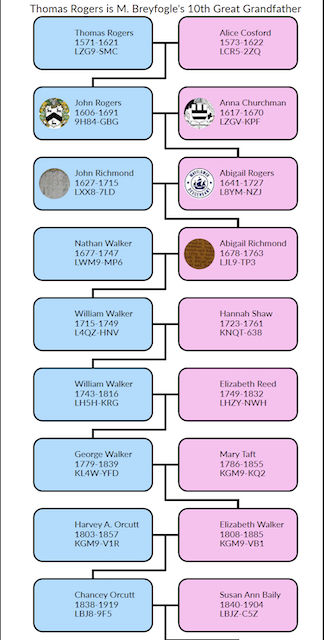
I didn’t learn this until later in my journey, but there is a helpful website, called Relative Finder,  which provides possible lineages based on your Family Search tree. This obviously means that you need an account and have entered in enough of your family tree to connect with the world tree that is there. You can see that this tool searches for more than just Mayflower Relatives, but I am showing just the Mayflower Direct Connections for my family. Hopefully you have more than one line as possible, but choose one and try to prove it. I chose to work on two lines, one from Thomas Rogers and one from John Cooke. 


Just like any resource, there are bound to be errors, so you need to do your own research to confirm, but this is the place to start. There is another tool through Family Search that ties into the Mayflower Society descendancy records, but if your family is like mine and have to prove a lot of generations, it is not likely to be too helpful.


Step 2: Try to find another published family history that might start to give you ideas of what has been documented and what resources to go to for documentation. For me, the Silver Books proved through generation 6, to William Walker and the place to start was to show that George was the son of William Walker. When I went to the Allen County Public Library (ACPL) see my post, I found a book on the Walkers:  Memorial of the Walkers of the Old Plymouth Colony Embracing Genealogical and biographical sketches of James, of Taunton,... and of their descendants from 1620 to 1860 by J.B.R. Walker, AM (Member of the Old Colony Historical Society” Printed by Northhampton: Metcalf & Company, Printers. 1861). This book provided me the next several generations through to my mother’s great-grandfather, Chauncey Orcutt. Since I knew the line from there, I was OVER the MOON to find my great-great-grandfather mentioned being in Ann Arbor, Michigan, in the book printed in 1861!


Step 3: Once you are confident that you have a line, you can submit a Mayflower Lineage Match (MLM). There is a fee and it may take 2-3 months to hear back, but it is an important step. Once you have submitted, the Mayflower Society will investigate other previously approved lineages and see where your line intersects previously approved. For me, I am the 13th generation and I was informed that they have proven through generation 7! Only 6 generations of birth’s, deaths, and marriages for me that needed to be proved!


Step 4: Once your MLM (from Step 3) has returned, the Mayflower Society also notifies your state’s historian for the state’s Mayflower Society. In my case, I will be joining through the PA Mayflower Society and I was connected with my awesome Co-Historian Sharyn Davis. Sharyn was an absolutely amazing resource and helped me each stage of the way from here. I learned soooo much from Sharyn, and she did so much work for me!! 


Your Historian will evaluate your line and will have you send in the documentation you have already collected and then set you on a path to collect the rest. I started with my own generation and worked backward toward the 7th generation.


This last step began June 16th and the next several weeks were a whirlwind of document gathering and submitting. Each day, I would send Sharyn an email with information or documentation and she would respond back usually providing more guidance and instruction. County Clerks offices, cemeteries, county historians, town clerks, and town historians were contacted both in New York and Michigan. Censuses, property records, newspapers, and lots of websites were scoured! It was a fun and fulfilling process, but is not for the faint of heart! I can’t even count the number of hours spent trying to gather the information!


We *think* we have provided enough documentation to “prove” my line, but it needs to go through final evaluation in Plymouth. I should know sometime this fall.


Meanwhile, I’m off to work on Jim’s Mayflower line….


America250-Revolutionary War Patriots --#6--Lt. Caleb Hopkins

Jim’s 5th great-grandfather, Lt. Caleb E. Hopkins (1749-1824) DAR (#A047932) served as a Lieutenant Revolutionary War Patriot.  He was the s...