Monday, May 20, 2024

History of Today for Tomorrow

The Tulip Tree

 Does family history always have to be stories of the distant past? Last week, as I was mowing our lawn, admiring our Tulip Tree and appreciating its provenance and meaning, it made me question this notion. Aren’t the stories of today histories for those in the future? If we don’t capture them today, then those who follow us may never know!

So, today, this blog is about the history of today written for those of tomorrow. The subject is this huge tulip tree and its story that goes back 25 years, nearly to this date.


Tove Moon

My husband worked at Barnes & Noble in Kalamazoo, MI with a lovely, caring woman named Tove Moon. Tove was a free-spirit always wearing billowy full length dresses with sandals and a beautiful smile. She was the epitome of a bookseller who could choose out exactly the right book for you after a quick conversation getting to know you. Tove was fond of Jim and not having any children of her own was ecstatic when she found out I was pregnant with twins. 


The black pot to the right of my husband
holds this year-old sapling.

In 1999, when our daughters were born, Jim was helping out doing odd jobs around her (and her mother’s) house. She had a tulip tree in her back yard and there was a sapling growing up next to it. As part of some yard clean up, Jim asked if he might have the sapling–tulip tree for twins, get it? Tove thought that was a delightful idea!


We knew that after I finished my graduate program we would be moving, so we didn’t plant it in our yard in Kalamazoo and just kept it in a pot. It lived like that for 3 years until we found our current home. It was an afterthought for those 3 years while we were managing twin babies, a dog, and finishing my PhD. The poor tulip tree lived through a lot, toddlers knocking it over repeatedly and  even a bird landing on it and breaking off its leading shoot. Instead of dying, it grew two main shoots!


Once we found our home in Pennsylvania, Jim planted it in the back yard where you see it today. It grew fast like most tulip trees do, but probably faster since it was so delighted to finally get the nutrients it needed. It was a beautiful green large-leafed tree, but for years that’s all that it was, until one May when our daughters were in middle school.


I guess I didn’t know what to look for in a blossom. One of my daughters had made it to a middle school state computer competition held at Dickinson College within a day or two of her birthday in the middle of May. It was a beautiful day, so I found an adirondack chair on campus waiting for my daughter to meet up with me. As I was sitting there I spotted a beautiful tulip tree…I recognized the leaves and on the ground scattered below it were these little orange and yellow petals. Wondering where they came from I peered up into the tree and saw, for the first time, a tulip tree blossom. These blossoms were scattered in and amongst the leaves, often hidden.


See? They are easy to miss!

We returned home that day and I immediately went out back to our tree and sure enough I saw a dozen or so blossoms sprinkled throughout the tree. I was stunned and amazed and wondered how many years had I missed this? (After looking up how many years before a tulip tree blossoms, chances are that I didn’t miss it many times.)


This year, they are easy to see and prolific!

Every May, right around our daughters’ birthday, I thoroughly enjoy the sight of these beautifully delicate tulip shaped blossoms. This year, as I look to the tulip tree blossoms I happily think of our daughters’ 25th birthday and Tove Moon, who passed away in 2011.


Apparently tulip trees can blossom for over 200 years and now since I’ve written this story down, (hopefully) people will learn the how and why this huge beautiful tree came to be in our yard long after both we and our daughters are gone.


Sunday, April 7, 2024

Inspiration in Surprising Places


Bertha "Birdie" Elizabeth DeBoer
(Enhanced by MyHeritage)
Nearly a year ago, I wrote about my great-aunt, Helen (Tubbs) Judson, my genealogy angel providing so much insight and research on the Tubbs and Orcutt families. The Orcutt family, my great-grandmother Cora (Orcutt) Tubbs’ line is the one that takes me back to the Mayflower.

Today, I would like to share about a different type of genealogy angel who provides me (and hopefully you) with inspiration. This is Bertha “Birdie” Elizabeth (DeBoer) Breyfogle, my husband’s paternal grandmother. I never had the pleasure of meeting Birdie, she passed away our freshman year in college. All four of Birdie’s grandparents emigrated from the Netherlands to the United States in the 1850s & 1860’s and settled in Grand Rapids, Michigan. Her mother Aafke (Eva) Van Dam born in 1871 was the 2nd oldest of 10 children and her father William DeBoer also born in 1871 was a twin (definitely not identical!) and the 4th/5th of 11 children. Family, the Dutch Reformed Church, the United States, and education were extremely important to them. Bertha was born in 1901 and the youngest of 4, with 3 older brothers. Her three brothers all served in World War 1 and ended up in careers in various government agencies. She was a woman ahead of her time and given opportunities that a lot of contemporary women were not offered. She was given the opportunity to attend Olivet College and transferred to the University of Michigan to finish her Bachelors and also Master’s degree.

William DeBoer & Eva Van Dam Family
c. 1911 (Enhanced by MyHeritage)


Women & College


Women might be inspired by her being among a small number of women earning a bachelor’s degree ’22 and also a master’s degree before 1925. Just imagine, when she graduated from high school and began college it was 1918 and women didn’t have the right to vote! 


I was curious, how unique was it that she was attending college in the late 1910s and 1920s? In investigating how many women were graduating from high school and college, I came across some very interesting and enlightening statistics. According to the National Center for Education Statistics, in a table that collected the percentage of persons 25 to 29 years old with selected levels of educational attainment by race/ethnicity and sex (estimated from census data): 

  • Bertha DeBoer 
    University of MI Diplomas
    in 1920, 22% of White and 6.3% of Black people completed high school,

  • Also in 1920, 4.5% of White and 1.2% of Black people earned at least a Bachelor’s degree. 

  • For comparison, in 2013, 40.4% of White and 20.5% of Black people earned a bachelors or higher. 

What was striking to me was the ratio of men to women. I had always assumed that women were significantly underrepresented in college, like 5-10% of the people in college were women. It turns out that in 1920, 47% of the people in higher education were women! (We won't, however, talk about what they were welcomed to study!) So while it is true that a very small percentage of White women were in college in the 1920’s, it wasn’t that they were women, rather so few people, overall, were college-attending. After 1920, the number of college attendees began growing but the number of men outpaced women, so women's attendance did fall to 40% of the total college-attendees by 1930 and 30% in 1940 but unsurprisingly in 1944 it surged to 50% and the women have (for the most part) kept pace or exceeded the college attendance.

Birdie as a young woman
c. 1920s


Birdie’s Inspiration


Additionally, I am inspired by Birdie’s record keeping! As I peruse her scrapbooks of her time in college, I am in awe of the meticulously detailed notes that she kept, especially of photos. I am sure that I would have loved knowing Birdie and we would have gotten along famously well and might have even scrapbooked together! My scrapbooking friends always make fun of me for my need and desire to “journal” on the scrapbook pages. (For those not familiar with scrapbooking, journaling is the text that you put on a page to help conjure up memories from the event or highlight the importance for the viewer.) But Birdie is my hero and inspiration!


As I flip through pages of her sorority and musical events, I am getting a sense of some of the social things she engaged in and what college would have been like for her and other people at the time. Here’s an example. She became a member of the Sigma Beta Society at Olivet College (it still exists today at University of Olivet-yes, name changed this past year!), this is the same college that my great-grandparents, Florence Stoddard and Edward Leach, attended and met at in 1903 (yes, funny coincidence!). 


Birdie's Scrapbook Page 
Billboard Advertisement for the silent film (1920)


Sigma Beta’s held an “Annual Public”, which appears to be a night of performance. I’m  not sure if Birdie was the photographer (I’m guessing so), but she had two photos of the scene/performers along with the program. The performance was a stage adaptation of the book “Old Lady Number 31” (1909) by Louise Forsslund (Mary Louise Foster) and made into a Broadway Play in 1916-1917 and a silent film starring Emma Dunn released 20 April 1920. Birdie included on the back the names of all of the women in the photo. I’m not sure why, though, that she wrote at the top “Old man 33” at the top of the back of the photo. I was confused, was this a different play, a spoof on the one that they were actually doing? I compared the photo with the program and indeed all of the people seem to be the same as the program. Was this just an inside joke? I’m not sure that I will ever know, but what I do know is the names of every person in the photo and the parts they were playing! I can’t say the same about most of my photos. 
"Old Lady Number 31"
Sigma Beta, April 1919

What I am so inspired by is the way that on EVERY photo, she identifies (almost always!) every person in the photo! I recognize that they took much fewer photos back then, but she always included as much as she could remember and that can’t be said about the thousands of photos I see in flea markets.


We probably all have thousands (if not tens of thousands) of photos with few of them identified. I, for one, am trying to make it a habit to enter in a title or description and name (tag) the faces in my electronic files. Maybe not all of them, but the special ones you upload into MyHeritage or Ancestry or some other format and the ones that shouldn’t ever be deleted!


I hope Birdie inspires you, too, so that all of your great photos don’t end up in the trash by some relative who hasn't a clue of who is in the photos or at a flea market with no prospect of being picked up my someone like me looking to reconnect them with possible descendants!


Saturday, March 30, 2024

Close to Home

 Three Generations of Conklin Family in Tecumseh c. 1921
Back: Virginia Irene, Viva Amelia (Howell), Myron,
Eliza Virginia (Webster),  Gertrude (Howell), Viva Gretel (Conklin) Collins
Front: Georgianna, Stuart Erwin, Jack Webster,
Herbert Roy, and Ellsworth Collins (MyHeritage Enhanced)

 Jim and I laugh that we are never very far from where his ancestors have lived…and we didn’t know it before moving there! It started when we were first married and spent our summers at Sand Lake in Lenawee County, Michigan, just along M-50 from Tecumseh. Jim didn’t have the opportunity to know his maternal grandparents, as they both passed away before Jim was born and since he grew up on the west side of the state they didn’t visit the cemetery plots for them. 


Some Connections in MI

One day Jim was talking with his mother when she said, “Well, you know, your grandparents are buried not too far from you in Tecumseh.” Nope, he didn’t know. That kicked off my investigation of the Conklin family in Tecumseh which led to the Webster, Howell, Wheeler, Spofford, and Remington families all who settled in Lenawee County in the 1830’s and were prominent (mostly farming) families in Macon, Ridgeway, and Tecumseh. I recently found while visiting the Mid-West Genealogy Center in Independence, Missouri, a wonderful collection of transcribed Plat Map books which identified the original land granted/purchased by each of Jim’s ancestors in the 1830s! Here’s an example from James L. Remington with a drawing of him I’ve shown before. I don’t think that I’ve shared the resource for finding the original Bureau of Land Management’s General Land Office Records, so I’m sharing the US Department of the Interior BLM Land Patents search page.


Some Connections in PA

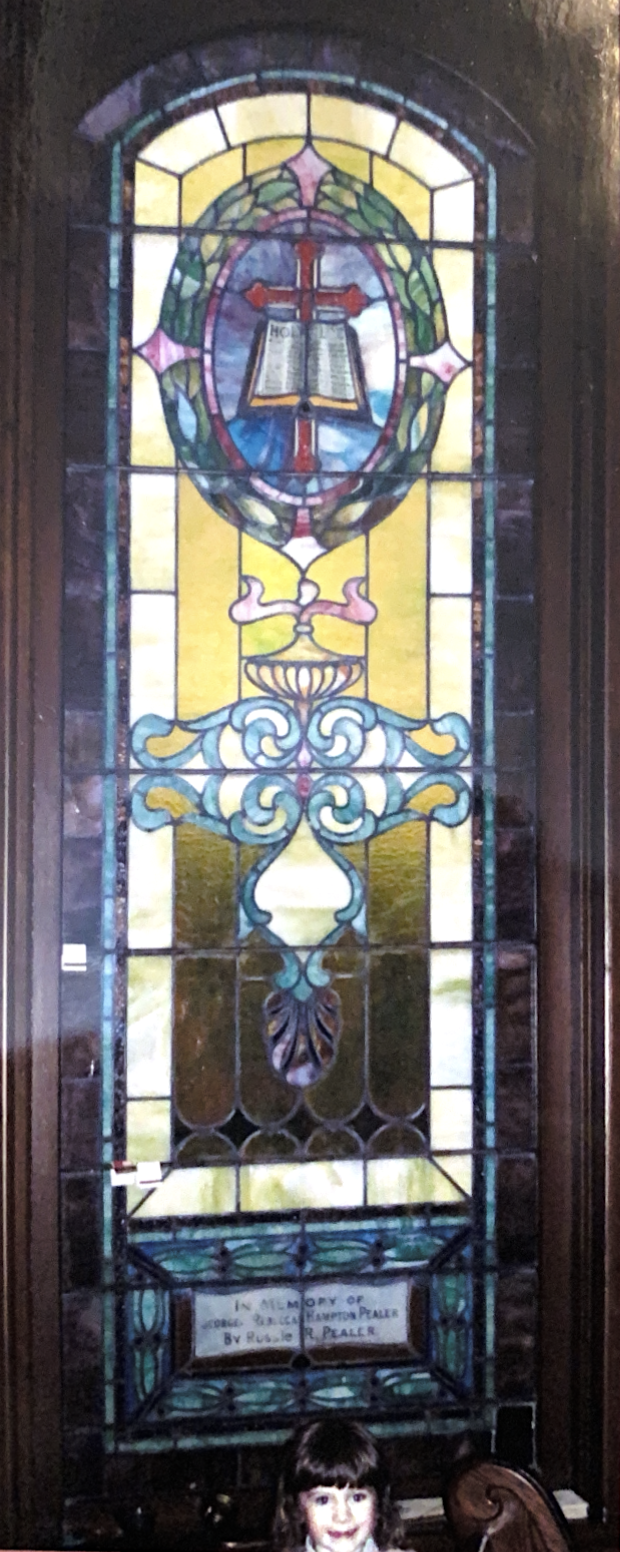
But that was over 30 years ago. We have now lived in central PA for over 20 years and we keep finding connections to Jim’s family here, too. One of our earliest discoveries was learning about Pealertown, Asbury, and Orangeville, where there was a church with stained glass windows in honor of Russel Ralph Pealer’s parents (the GAR member of the previous blog). You can see our kids who have been dragged along on this journey (and more cemeteries than they can count!)

Asbury Church in Orangeville, PA


Our daughters in front of the window dedicated
to their 4xgreat-grandparents!


Since I have become Jim’s family’s family historian too and we are the joyful recipients of boxes of photos and paperwork from both
John Harold Breyfogle &
Elizabeth Santee Homestead
Nescopeck, PA c. 1900
(MyHeritage AI Enhanced)
sides. About 12 years ago, we were given boxes of family things from Jim’s aunt. In it I came across a photo of Jacob William Breyfogle as a little boy. I knew by that time that the Breyfogle’s came from the Nescopeck, PA area (about 30 minutes from where we live now) and had a farm there (see photo of John Harold Breyfogle 1835-1910 and wife Elizabeth Santee 1842-1913), but the photo of little Jacob was taken at the McMahan & Irland photography studio in Danville (just across the river from where we live now!). What a funny coincidence!
Jacob William Breyfogle
c. 1871 (MyHeritage AI)

McMahan & Irland
Danville, PA


Traveling Back Home


Last week’s blog started with an investigation of the Gettysburg Glass matchstick holder that Russel Ralph Pealer must have picked up that Jim brought back from his parents house. As I have been continuing to look through the boxes of items, I came across something else a little closer to our home now!


When Russel Ralph Pealer traveled, he apparently kept his wife up to date with where he was through the US Mail. I found numerous letters on wonderful stationary of the hotels and locations where he visited. When I came across this envelope and letter, I was thrilled. 


On September 18, 1892, Jim’s great-great-grandfather stayed at the Neff House, which was a hotel in Sunbury, PA.  Unfortunately, this hotel no longer stands, it appears that it fell into disrepair in the 1980’s but it started its life as the Washington House in 1790 and renovated twice over the course of its life. (If you are familiar with Sunbury, it was at the corner of 2nd & Market across from the Court House--now where a Bank and Weis Market are.)


It’s not easy to read his penmanship, so I will transcribe a bit here:


“Dear Wife,

I am well and had a good night rest. I am going to Danville this morning-....” 


Danville?! How fun! He doesn’t say if he is visiting someone or what he is doing there, but his sister Matilda Pealer Price is living in Danville at the time and his father is still alive although appears to be living in Fishing Creek.


Jim and I were both born and raised in Michigan and although we’ve lived in PA for more than 20 years, we still consider ourselves Michiganders…but it appears Jim’s ancestors and all of their connections (and belongings) are finding their way closer to home and taking us with them.


Saturday, March 23, 2024

Glass, Gettysburg, and the GAR!

 My husband and I are in the time of our lives where our parents are downsizing and simplifying their lives, which means we (as natural preservers of family history) are acquiring more memorabilia (I know, right at the time in which I’m trying to sift through our own things!).

Russel Ralph Pealer
GAR Uniform

This week, Jim brought back to PA a curiosity from his father’s collection, something that we are fairly certain came from Jim’s father’s grandfather, Russel Ralph Pealer (Jim’s middle name comes from this amazing man). 


I had never before seen this glass bowl, it wasn’t something prominently displayed in their home, instead it had been relocated to the cluttered basement office Jim’s father kept. It’s a curiosity and like the silver in my last post, this took me down a rabbit hole into the world of Glass, Gettysburg, and the GAR!


Glass


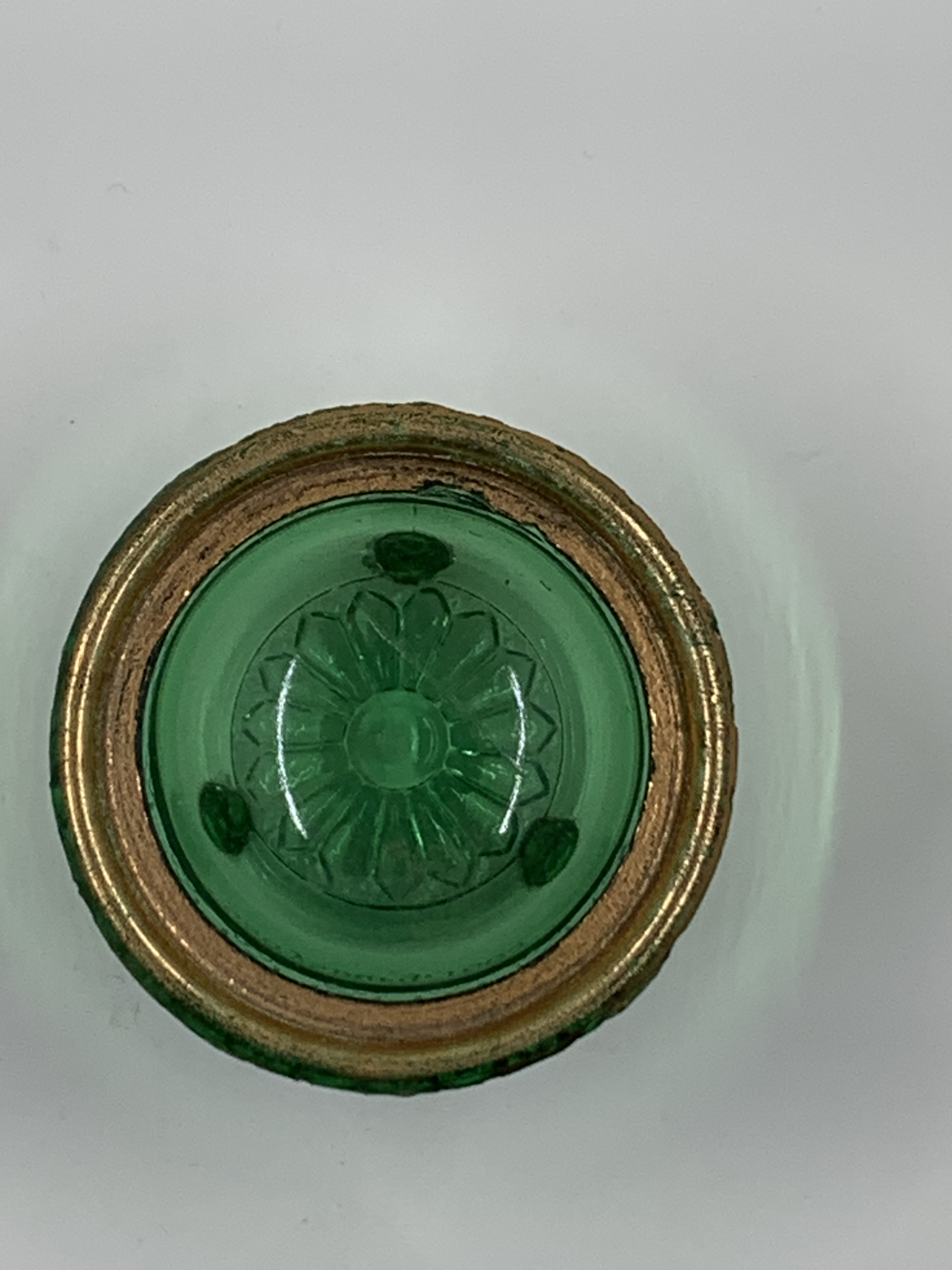
I found this glass piece curious, since it plainly says “Gettysburg, 1863” and “Souvenir of”, it is suggestive of a souvenir that someone would have picked up from Gettysburg commemorating the battle of Gettysburg July 1-3, 1863. It didn’t look old enough to be from 1863 and it was clearly something to commemorate the battle long afterwards. So, how old is it actually and how did it come by being a souvenir in Jim’s father’s family? I am reminded how lucky we are to be living in the age of the internet and at my fingertips I could start to explore.


Did you know that there is an Early American Patterned Glass (EAPG) Society? Nope, neither did I! I guess I should have learned from my investigation into my great-grandmother’s Irises (Flowers are Forever!), that there is a society for nearly everything! 


As I was searching (using Google Lens) for an image or information about this little souvenir, I came across this nearly identical glass piece, the only difference was the location for where the souvenir is acquired.  Clearly, the company that made this mass marketed piece would just gold foil different names onto the pots for sale at various tourist attractions. I started seeing “EAPG” on all sorts of websites describing various glass pieces and learned that EAPG stood for Early American Patterned Glass and they have a society with an absolutely AMAZING website that catalogues all different companies and patterns of glass.


Although I didn’t find the “exact” glass, it is pretty darn close to the United States Glass Company’s match/toothpick holder pressed glass “Colorado” collection. I am fairly certain that this was produced by the US Glass Co around 1913, which would have been the 50th Anniversary of the Battle of Gettysburg.


Gettysburg


Many people know that Gettysburg was an important war during the Civil War. I have mentioned before in an earlier blog last Memorial Day, that both Jim and I had great-great-grandfathers who bravely served in the Civil War and I shared about the records I found in the National Archives. Both ancestors also bravely fought in the Battle at Gettysburg. Jim’s ancestor, Russel Ralph Pealer, was in the 16th Pennsylvania Cavalry. Their regiment joined the 3rd day of the battle on July 3. The monument to the 16th PA Calvary was erected in 1884.


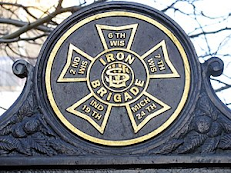
Lynn’s ancestor, Henry Clay Stoddard, was a member of the 24th Michigan which was part of the Iron Brigade and arrived to Gettysburg July 1 and fought for the 3 days. The 24th Michigan lost 397 out of 496 soldiers, an 80% casualty rate in this battle, second only to the 1st Minnesota who suffered a 82% casualty rate. In 1889, the surviving members congregated for the installation of a monument at Gettysburg in 1889. I believe my great-great-grandfather attended this, but I couldn’t pick him out of the photo. He died in 1909, so he would not have attended the 50th Anniversary in 1913.


GAR (Grand Army of the Republic)


Henry Clay Stoddard
Both of our ancestors were proud members of the GAR in Michigan. "The Grand Army of the Republic (GAR) was a fraternal organization composed of veterans of the Union Army (United States Army), Union Navy (U.S. Navy), and the Marines who served in the American Civil War. It was founded in 1866 in Decatur, Illinois, and grew to include hundreds of "posts" (local community units) across the North and West. It was dissolved in 1956 at the death of its last member, Albert Woolson."(1) Henry Clay Stoddard was a member of the Steedman Post, No. 198 in Reed City, Michigan and served in many leadership positions within the local Post. Russel Ralph Pealer, was a very active member in his local post (Prutzman Post No. 72, Three Rivers, MI) and also state organization and even served as the Statewide “Department Commander”, the highest position in the state in 1899. Here is a photo of his recommendation for election to the position and GAR medals from when he served as a representative to the national reunion encampments.


GAR Medals from 1901-1917
from various encampments.
Although I found no proof that R. R. Pealer went to Gettysburg in 1913 for the 50th Anniversary of the Battle of Gettysburg, I think it is a pretty safe bet that he was one of the 43,000 people who traveled to Gettysburg for that commemoration and probably picked up the little glass trinket along the way.


America250-Revolutionary War Patriots --#6--Lt. Caleb Hopkins

Jim’s 5th great-grandfather, Lt. Caleb E. Hopkins (1749-1824) DAR (#A047932) served as a Lieutenant Revolutionary War Patriot.  He was the s...