Tuesday, April 25, 2023

Flowers are Forever!

Spring Flowers!!

Spring is my absolute favorite time of year! I love the increasing light of day, the weather getting warmer, the excitement of the end of a school year, looking forward to spending the summer at my favorite place (Sand Lake), and the spring FLOWERS!! I really love most flowers, but for some reason the spring flowers…the daffodils, hyacinths, tulips, forsythia, azaleas, rhododendron, and irises make me so very happy!


Recently, while preparing the flower beds I was reminiscing about my flowers and thinking about family. About 15 years ago, my mother was thinning out her irises at our summer cottage in Michigan and asked if we would like to bring back some of the irises to our house in Pennsylvania. Sure!! 


My Great-Grandmother’s Irises

These particular irises have a history, they originally came from my great-grandmother Cora Orcutt Tubbs’ (1878-1958) garden. Irises are a rhizome, so they just grow and spread and replicate themselves. So, basically, the flowers that I see are the SAME flowers that my great-grandmother would have planted so many years ago.


This made me start thinking both about my great-grandmother and also about irises. What I have found about both in the past several weeks is amazing, to me! This great-grandmother is my connection to the Mayflower. I haven’t proven it, yet, but I’m working on it. It turns out that both her mother and father individually have connections to two different Mayflower passengers (Thomas Rogers & Frances Cooke). She was born and raised in Ann Arbor, Michigan and married Charles Walter Tubbs, the grandson of a settler to Washtenaw County. His grandfather, George W. Tubbs (the mystery photo I identified in my last blog) purchased 56 acres of land in 1820 in Michigan-Toledo Strip in what is now called Scio Township.


Heritage Irises


I was curious about my great-grandmother’s irises and wanted to see if I could identify the actual

type of irises. Did you know that there are Historical Societies that catalog irises? I had no idea!

But I learned. 


The Historic Iris Preservation Society has an amazing website with a photo gallery of irises (3,292 of them!!) You can narrow your search

by Iris Class (e.g, Japanese, Louisiana, Siberian, etc), or Bearded Classes, Age, Standard Colors,

Patterns, etc! 


I searched and searched and consulted with a few people and finally decided that the irises that have

been passed down from my mother, her mother, and then her mother-in-law (Cora) are called

Balder. They are a Tall Bearded variety.  According to The American Iris Society’s Iris Encyclopediathey were originally made available by Goos &  Koenemann from Rhein, Germany in 1924. 

Balder, from Iris Encyclopedia


My garden irises, c. 2019

My Irises are 100 years old next year!!


I feel such a connection with these irises and think it is so very fascinating to think about all of the homes these have decorated. I was hoping to find some photos of the irises actually decorating some of these houses, but alas, at least I have photos of the houses.

Beginning with my grandmother, Cora Orcutt Tubbs at her home at 921 E. Huron, Ann Arbor, Michigan, the irises began their journey in our family.Cora is the woman in the front row in the dark dress. This is the celebration of their 50th Wedding

Anniversary at the house. It was August 1947, so if the irises were still there, they were not in bloom, but clearly she loved flowers too!


Given the time frame, we believe, although no one can exactly recall, but the irises would have had to adorn her daughter-in-law’s house  (my grandmother) Elizabeth Leach Tubbs at their home at 1301 Kingwood, Ypsilanti, Michigan (1950-1972).


My grandmother took some out to the cottage, first in 1962 to the Rynearson Cottage two doors down from the current cottage. Then to (now) my parents’ cottage on Sand Lake at 3076 Marsh Road, Onsted, Michigan (1968).


I included this second photo because the four people sitting in the seats are the four grandchildren of Cora Viola Orcutt (L to R: Ed, Ted, Sally, and Anne). Ed was the tall young man in back of the 50th Anniversary party photo a head above his little sister, Sally.


And in 2010, we added the irises to our house in Riverside, Pennsylvania. I always thought they were fitting for our 1890’s home and now I  love them even more!


Happy Spring! May the flowers of your garden today bring you joy and provide memories for a lifetime or.... like with the case of my irises for generations!

Friday, April 14, 2023

The Case of the Cased Image...or...Mystery Man, Am I right? You be the judge!

 Who would have ever guessed that old photographs could be dated so precisely? Oh, yes, I get that fashion plays a role. Just look at the photo of me and my great-grandmother in a previous posting and you will see those stripes and wild colors. Clearly the 1970’s!


But take a look at this photo in its original case. For most people, it’s just really old…who knows exactly when? (And who cares?) It turns out that there are so many clues to dating one and I had absolutely no idea! 


Why do we need to date a photo, anyway? Well, if you have no clue who the person is in the photo, one of the first steps is dating a photo and the age of the person to figure out who it might be.


Background


Family Photo Detective: Learn How to Find Genealogy Clues in Old Photos and Solve Family Photo Mysteries by [Maureen A. Taylor]My husband and I are beneficiaries of all things family history, especially photographs! Which means that I have all sorts of fun and interesting things to learn about passed down through the generations. This week, I thought I would revisit some old photographs to see if I could identify who they are. (Most are identified, thank you to Bertha DeBoer Breyfogle and Elizabeth Leach Tubbs!) 


But these old cased image photographs are difficult to write names on! So, I have 4 cased images that look like the photographs above (of course with different people in them!). I love the challenge and definitely learning something new.


My sister gave me the book Family Photo Detective: Learn how to find genealogy clues in old photos and solve family photo mysteries (2013) by Maureen A. Taylor Family Tree Books: Cincinnati, Ohio for Christmas and it’s the PERFECT jumping off point. I highly recommend it!


Steps toward identification:


The Photo Detective (Maureen Taylor) provides a great outline for dating a photo. The first thing to do is to identify the type of photograph. And pre-1900, there were four main types: daguerreotype, ambrotype, tintype, and cabinet cards.


The example to the above is a cabinet card of an unknown family member, someone wrote on the back “He is an Orcutt”--but I haven’t figured out who, yet. You’ve likely seen a cabinet card before. I’m not going to talk about the cabinet cards, but did you know that if you lay 6 regular (20#) sheets of paper in a stack, if the cabinet card is the same thickness or thinner than the stack, then it was created between 1858-1869? Cool, huh. There’s lots of other identifiers like that. 


But back to cased images. Photographers in the United States, beginning in 1840*, used the miniature cases for daguerreotypes (which are identified by their mirror-like reflection). These cases were also used for ambrotype and tintype photographs. 


What type of photograph is it?


My photograph is daguerreotype (1839-1860, most popular 1842-1858). In person, I can clearly see the mirror reflection that goes along with this type of photo. It’s not obvious in this photo of it, but you could instantaneously see what I mean if you held it yourself.


Who could it be?


Based on just this information, I can narrow it enough to begin thinking about who it is. This photo and case was inherited from the Tubbs-Leach side of the family. If it is a family member in my direct lineage, which I believe to be so, then we are looking at the great-great-great-grandfather generation (based on age/timing). I started with 8 possible candidates. We can discount several (William Croft, Rodman Stoddard, Timothy Randall, and George Bedell) because they were not the right age, already deceased, or we already have an identified photograph and it is clearly not the same man.


We are left with four possibilities:

  1. George W. Tubbs (1802-1854)

  2. Harvey Orcutt (1802-1858)

  3. Henry Leach’s father (no idea)

  4. George Dolan Bailey (1805-1849)


We need more information, so on to the next step.


Describe the case.


  • The outside measurements of the case are 3.25” x 3.625”, which is close to what they call a “Sixth Plate”. It is the largest of the cases I have and is consistent with the cases made for daguerreotypes. 

  • The case is made from wood covered in an embossed leather with a hook-and-eye clap (as opposed to a thermoplastic case which began in 1854). These are consistent with 1840s.

  • The velvet cushion is a burnt orange color. Unfortunately, there are no photographer’s or maker’s marks on either the velvet or the brass mat.

  •  The exterior case design of flowers is consistent with the 1840’s focus on nature motifs.

  • The mat is what is called nonpareil which began being used in the mid 1840s.

  • From the mat and case, it appears to be between 1845-1850.

  • Existence of the “preserver”--the thin metal piece over the mat means it was after 1847. So, the date is 1847-1850!!


Men’s fashion.

  • His clothing seems to be consistent with the 1840s:

    • Extra-long, narrow sleeves of coat

    • Tailored white cotton shirt with small collar turned up under a tie

    • Necktie is tied in a horizontal bowknot, dark colored

    • Hair & Beard: hair is ear-length, parte high at one side; clean shaven but fringe beards (he doesn’t have a beard so that is one thing not consistent)

Age of the Man

  • This man appears to be in his 30’s or 40’s.


It still seems it could be any of these 4 men, given their ages and the timing of the photo in the case (1847-1850). 


Further knowledge


It turns out that a cased image of a photograph that opened like a book was pretty much a United States thing, and Henry Leach’s father, whoever he is (to my knowledge and research) never came to the US, so I think we can safely say it isn’t him.


Also, it turns out that I have two more “unidentified” photos that are dated into the 1850’s and appear to be this same man, so I think I can safely discount George Dolan Bailey, who died in 1849.


(Oh, and you should NEVER do what I did to the photo on the left and take the cases apart!! The cases are meant to preserve and protect the photos. This one on the left is an ambrotype, we can tell because of the black coating that is flecking off the back!)


We are down to 2: George W. Tubbs or Harvey Orcutt.


Last Clue: Family Resemblances


Fortunately I have photos for the sons of both George W. Tubbs and Harvey Orcutt. Samuel Obed Tubbs is on the left and Chauncey Gould Orcutt is on the right.


It’s also really hard to tell in these photos and a little more evident in the photos in real life, that the color of the eyes…they are Tubbs eyes. Jim is skeptical that I can see anything about the eyes, but I’m pretty convinced that our mystery man (above) is the father of the man to the left (Samuel Obed Tubbs), so I think I have identified 2 of my 4 cases and they are George W. Tubbs (1802-1854). 


Have I solved the case of the cased image? Do you agree???


Friday, April 7, 2023

Long Ago Friends!


Today’s story is not about long lost dead relatives, okay maybe there’s a little bit of that, but they aren’t mine (or my husband’s!). This blog is about using genealogical research skills to connect two long lost living friends, my dad and his elementary school best friend, Randy.

Dad and His Friends


My dad in front of his elementary school a few years ago on a trip with my sister back to Ridgewood, NJ
Dad visiting his childhood home

Anyone who has ever talked with my dad knows that he absolutely LOVED the years of his youth spent in Ridgewood, NJ. He loved everything about it. He loved his house. He loved dinner every Sunday with his Italian Nana and Pop and his cousins in Elmsford. He loved his Willard Elementary school, and his friends! My grandfather’s job relocated the family to the midwest when my dad was around 10 years old and he lost connection with all of his playmates and elementary school chums. (Not quite like now where it would be easy to stay connected, if you wanted to.)

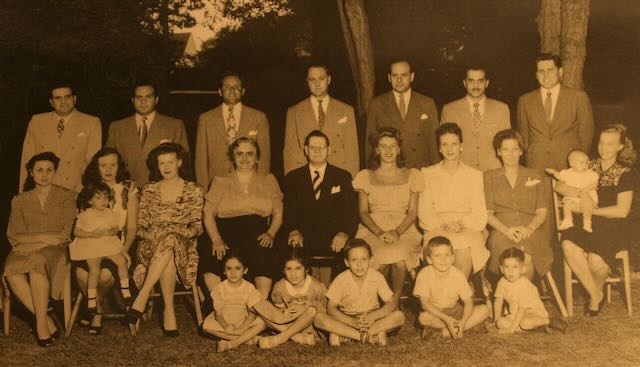
My dad's Italian family in Elmsford, NY
My dad is the oldest boy in the front row.

He’s still connected with his first cousins who were about his age. But for years, dad has talked (and wondered) about “what ever happened to X friend?” He asked “Couldn’t the computer be used to help find my friends?” He would also wonder if THEY would even remember him or if they wondered about him. (Chances are that people would have a hard time tracking down my dad because around the same time that they moved, my grandfather changed their last name to a less Italian sounding one.) He was the kid that moved away and his friends' lives went on without him. Except one, who moved away before him…Randy Butler.


Finding a Friend


Just over a year ago, one of my daughters was visiting my dad when he asked, “I wonder whatever happened to Randy Butler? He was my best friend in elementary school and his family moved away to Alabama the year before my family moved. I think Randy’s dad was a lawyer.” Okay, what are the chances that you find a Randy Butler in the US? Pretty good, it’s a common name. What are the chances that you find THE Randy Butler? Hmm…not so much. And how do you know it is actually the one?


Being the dutiful granddaughter, she took him up on the challenge. Within minutes, my daughter Googled and came up with Charles R. Butler (the R stands for Randolph) in Alabama and a photograph. Okay, really? Could this be him? My daughter showed the photo to my dad and he said, “Yeah, that looks like him.” My daughter texted me and asked if I could help track down Randy’s address so my dad could reach out. Ooh, hold your horses. Let’s slow down.


My dad gets excited by things and I thought before we get too far down this path of reaching out to him that we might just want to verify that this Charles R. Butler is the Randy Butler of my dad’s youth. 


I noticed the birthdate of this man was the same as my dad’s.

         “Dad, did you know that you two had the same birthdate?” 

          “No.”

          “Dad, don’t you think you would have known if you and Randy had the same birthdate?”

          Shrug. 


Now, I think if my “best” friend had the same birthdate that I would know about it! Maybe elementary school boys didn’t care about things like matching birthdays?


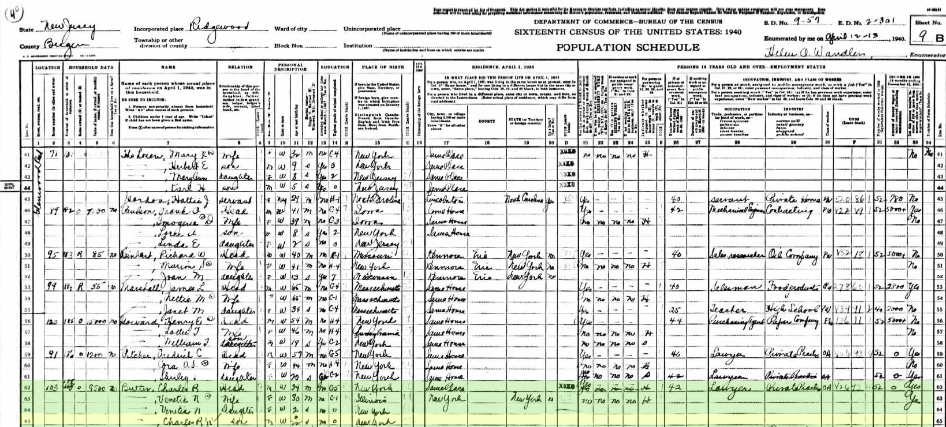
So I hopped on to Ancestry.com and searched for a Randy Butler in Ridgewood, NJ with a birthdate around my dad’s. Whoop, up pops the 1940 Census in Ridgewood, NJ complete with Charles R. Butler Sr. (lawyer) and newborn Charles R. Butler, Jr. I asked Dad if this was the street that Randy lived on but he wasn’t sure. He knew how to get to Randy’s house, but didn’t really remember the street name.

Okay, but let’s do a little more research. Why Alabama? Did this Butler family really move to Alabama? In the 1950 Census they are still living in Ridgewood and the 1960 Census isn’t available yet. A little more searching of marriage certificates and other things available through Ancestry.com indicated that this man’s maternal grandmother was originally from Alabama and in 1962 (according to the Social Security Death Index) his mother was living in Alabama. 


Connecting Long-Lost Friends


I did lots more searching, but I was already convinced that Randy Butler, my dad’s friend, was this same man my daughter found. But how good of friends were they? Would Randy even remember my dad?


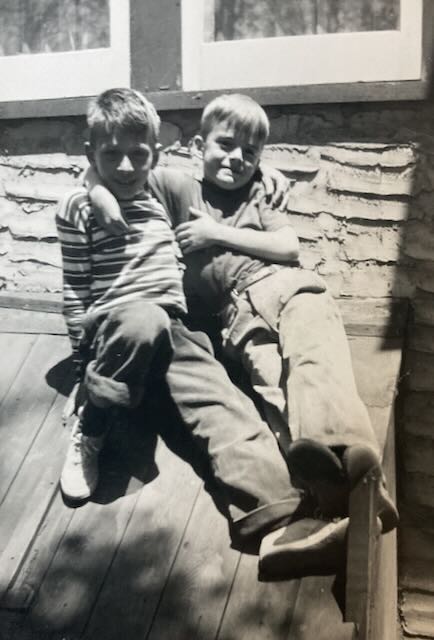
My dad said he has a photo of Randy. He shows me the photo and I am convinced of two things. One, given the pose Randy has in the photo with his arm draped around my dad, he did at least like my dad at the time, not sure if he’ll remember him 70 years later (!!) though, and two, Randy is DEFINITELY the same man in the Google photo. You know how some people are recognizable in photos throughout their entire lives?!

My dad is pretty old fashioned when it comes to communication. He doesn’t have a cell phone (unless you count the flip phone he keeps in the car for emergencies but doesn’t always remember how to use it), nor does he have an email address. He wants to write a letter, of course. So we need a US mailing address. Well, Ancestry.com comes through again with an address from 1995. Might be a little outdated, but a Googlesearch confirms we have the right address.


My dad sends a lovely letter “Dear Randy….” signed “Donny” and encloses a copy of the photo. Within one week (through US mail!), my dad has a letter back from Randy, saying “Dear Donny…of course I remember you!....Randy” (although no one else calls me Randy!) 


Amazing! 


Through birthday greetings, letters, email (Randy sends them to my mom's email!), and the phone, these two friends who haven’t seen or heard from one another in over 70 years have reconnected! Although they haven’t made an in person visit, they have caught each other up on their families and lives since 1950. It’s truly a beautiful thing. And it was all because of research skills developed from genealogy.


Fast Forward to Today


So why does this come to mind today? Well, when I was doing research on Randy’s family to verify he was really my dad’s friend, I learned a lot about his family. He had some knowledge and background but he didn’t know much about his grandmother’s family. I spent one evening searching and found that his grandmother was a member of the social organization, Daughters of the Revolution. So while I was on my family history road trip, I stopped in to the DAR Library.


DAR vs. D of R 


I knew at the DAR Library that while you are on their premises you can look up (free of charge) anyone’s DAR Application and look through their lineage. Since I was already going to be at the library, I put looking up Randy's grandmother's application on my list of things to do.


Her application wasn’t there. I couldn’t find it. I couldn’t even find reference to that DAR Chapter in Ridgewood, NJ!  I needed help.


After a concerted effort on the part of both me and the DAR Librarian, she offered a possible solution. Are you sure that this was a DAR Chapter and not in the Daughters of the Revolution of 1776 Organization? What? There’s a different one? Yep. Now defunct.


I looked to the newspaper article that I had about his grandmother and sure enough it said “Daughters of the Revolution”, but my mind had jumped straight to assuming it was DAR! Well, what do you know, there is another whole other organization that might be useful in research! FamilySearch knows all about it and have links to where you can look up members/applications. 


So, in a matter of seconds (once I made it to the right page), I had the Application/Membership number along with which patriot she was related to. The Suffolk County Historical Society Museum is the keeper of these records, so you can just fill out their application along with the copying/look up fee and a self addressed stamped envelope and they will send you the application. This was several weeks ago. 


Today was the reward! Four 8.5” x 14” copied sheets of paper that look much like a DAR application complete with names and dates back to the Revolutionary War Patriot! This application actually included two more generations beyond the Patriot.


I just love family history and the hours of fun it provides me! And the joy it brings to others, like Dad and Randy connecting again after 70 years!

America250-Revolutionary War Patriots --#6--Lt. Caleb Hopkins

Jim’s 5th great-grandfather, Lt. Caleb E. Hopkins (1749-1824) DAR (#A047932) served as a Lieutenant Revolutionary War Patriot.  He was the s...